
Why Starting to Save at 18 Beats Saving More at 30
Transparency Disclosure: To keep our guides free for everyone, this post contains affiliate links and display advertisements. If you click an affiliate link and sign up, we may earn a commission at no extra cost to you. As an ex-banker with 25 years of experience, I only recommend tools that I believe provide genuine value to your financial health. Read our full Affiliate Disclosure here.
Many people believe they should wait until they earn “real money” before saving.
In reality, when you start saving matters far more than how much you save. Starting at 18 — even with small amounts — can put you far ahead of someone who starts later with more money.
This article explains why, in a simple and realistic way.
The Biggest Saving Myth
A common belief is:
“I’ll start saving when I earn more.”
The problem is that time is the most powerful factor in saving — not income.
Money that starts earlier has more time to grow, even if the amount is small.
The Power of Time (Not Big Numbers)
Saving early gives your money:
- More years to grow
- More compounding
- More flexibility
Once time is gone, you can’t buy it back — even with higher income.
A Simple Comparison (No Maths Degree Needed)
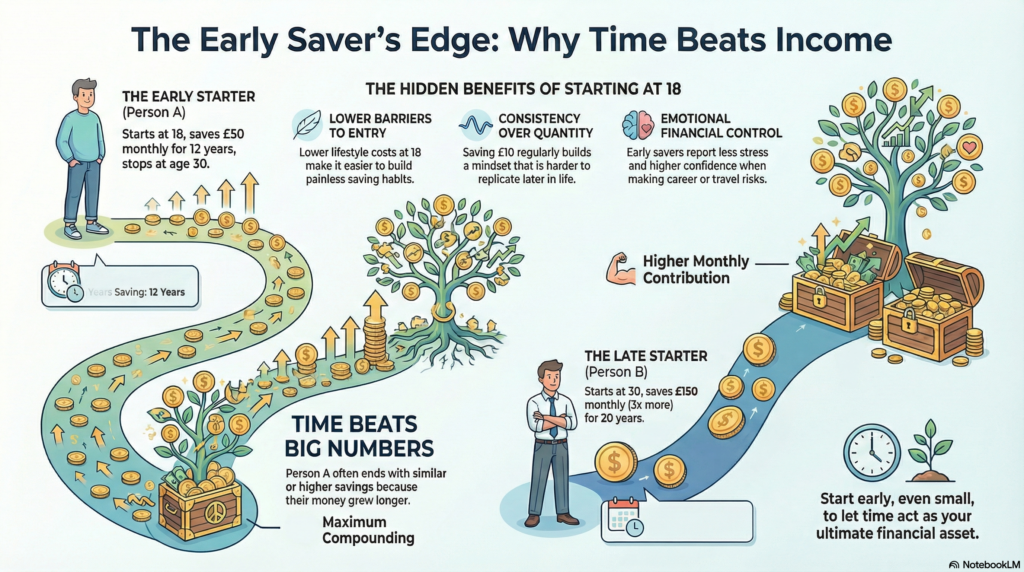
Person A: Starts at 18
- Saves £50 per month
- Saves for 12 years
- Stops saving at 30
Person B: Starts at 30
- Saves £150 per month
- Saves for 20 years
Even though Person B saves more each month, Person A often ends up with similar or even higher total savings, because their money had more time to grow.
📌 Starting early reduces pressure later.
Why Saving Early Is Easier Than You Think
At 18–24:
- Lifestyle costs are usually lower
- Habits are easier to build
- Mistakes are cheaper
- There’s more time to recover
Saving small amounts early feels painless compared to trying to “catch up” later.
What If You Can Only Save £10 or £20?
That’s enough.
Saving is not about the amount — it’s about:
- Consistency
- Habit
- Momentum
£10 saved regularly at 18 builds a mindset that £100 at 30 often struggles to replace.
The Emotional Benefit of Starting Early
People who start saving early often:
- Feel less financial stress
- Avoid panic decisions
- Feel more in control
- Take smarter risks later (career, travel, study)
Saving early creates confidence, not restriction.
What If You Didn’t Start at 18?
This article is not about guilt.
If you’re starting later:
- Start now
- Start small
- Focus forward
The second-best time to start saving is today.
How to Start Saving at 18 (Simple Steps)
You don’t need complicated systems.
Start with:
- A basic savings account
- Automatic transfers
- Small, regular amounts
Free tools and cashback platforms can also help beginners save without changing lifestyle — but learning comes first.
Key Takeaways
- Time beats amount
- Small savings early > big savings late
- Habits matter more than income
- Starting early reduces future stress
Final Thought
You don’t need to be rich to save early.
You just need to start.
Why Trust Bright Savings UK?
Bright Savings UK is run by a former banker with over 25 years of experience in the banking and financial services industry. Our goal is to help everyday people save smarter, with clear explanations and practical guidance.
Suggested Internal Links
- What Is Interest? Simple vs Compound Interest [Link]
- How to Build an Emergency Fund in the UK [Link]
- How to Budget Your Money for the First Time [Link]
How We Monetize This Site
To support the research and running of Bright Savings UK, we use two primary methods of monetization:
- Affiliate Links: Some links on this site are affiliate links. If you click and open an account, we may receive a commission. This does not change the price or terms you receive from the provider.
- Display Advertising: We host third-party advertisements through Google AdSense. We do not directly control the specific products shown in these ad units, and their presence does not constitute an endorsement by Bright Savings UK.
Disclaimer: This article is for educational purposes only and does not constitute financial advice. Always review provider terms directly before applying.
Pingback: Money Mistakes Young People Make (And How to Avoid Them Early) | Bright Savings UK
Pingback: What Is the Average Savings Amount in the UK by Age? (2026) | Bright Savings UK