
Money Mistakes Young People Make (And How to Avoid Them Early)
Transparency Disclosure: To keep our guides free for everyone, this post contains affiliate links and display advertisements. If you click an affiliate link and sign up, we may earn a commission at no extra cost to you. As an ex-banker with 25 years of experience, I only recommend tools that I believe provide genuine value to your financial health. Read our full Affiliate Disclosure here.
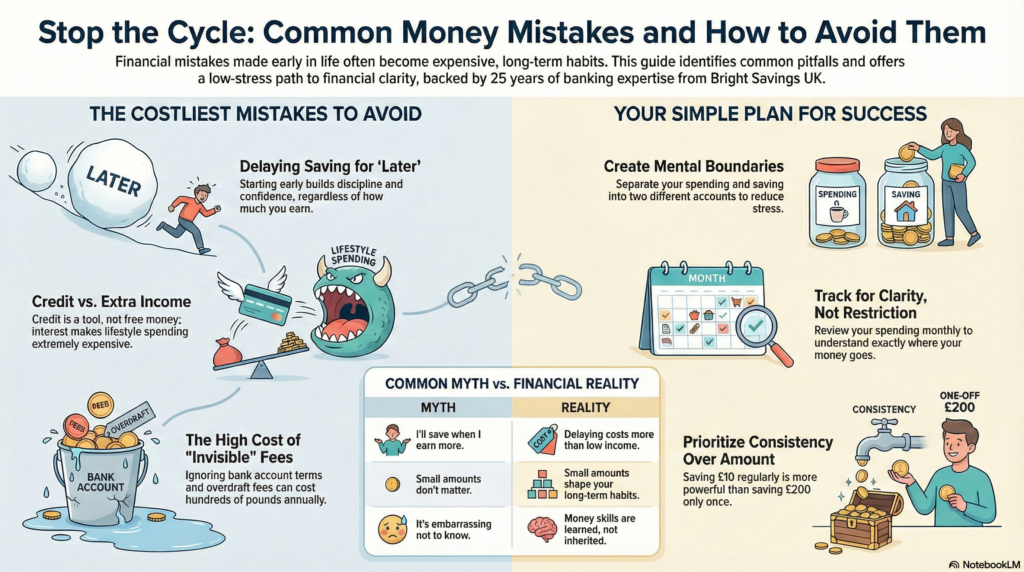
Everyone makes money mistakes — especially at the beginning.
The problem isn’t making mistakes. The problem is making the same expensive mistakes for years without realizing it.
This article highlights the most common money mistakes young people make and how to avoid them before they become habits.
1️⃣ Thinking Saving Can Wait
Many people believe:
“I’ll start saving when I earn more.”
This delay often costs more than low income ever does.
Even small savings early build:
- Discipline
- Awareness
- Confidence
Avoiding this mistake doesn’t require more money — just starting.
2️⃣ Using a Bank Account Without Understanding Fees
Many beginners don’t realise:
- Overdrafts cost money
- Missed payments add fees
- Small charges add up
Understanding your account terms early can save hundreds of pounds over time.
Knowledge is free. Fees are not.
3️⃣ Treating Credit Like Free Money
Credit cards, overdrafts, and buy-now-pay-later options feel easy — until interest kicks in.
Common mistake:
- Paying only the minimum
- Ignoring interest rates
- Using credit for lifestyle spending
Credit is a tool, not income.
4️⃣ Not Tracking Where Money Actually Goes
People often say:
“I don’t know where my money goes.”
This usually means:
- No basic budget
- No spending awareness
- No review at month-end
Tracking doesn’t mean restriction — it means clarity.
5️⃣ Keeping All Money in One Account
Using one account for:
- Spending
- Saving
- Emergencies
…makes it harder to save.
Separating money (even into two accounts) creates mental boundaries that help beginners save without stress.
6️⃣ Ignoring Small Amounts
Thinking:
“It’s only £5 — it doesn’t matter.”
Small amounts matter because:
- They repeat
- They form habits
- They shape behaviour
Saving £10 regularly is more powerful than saving £200 once.
7️⃣ Feeling Embarrassed About Not Knowing
Many young people avoid learning about money because they feel:
- Behind
- Ashamed
- Confused
Money skills are learned, not inherited.
Asking questions early is a strength, not a weakness.
If You’re New to the UK or Managing Money Alone
These mistakes are even more common if:
- You’re studying
- You’ve moved countries
- You manage money without family support
This guide assumes no prior financial knowledge.
How to Avoid These Mistakes (Simple Plan)
You don’t need complex systems.
Start with:
- One savings goal
- One budgeting habit
- One trusted source of information
Small steps compound over time.
Why Trust Bright Savings UK?
Bright Savings UK is run by a former banker with over 25 years of experience in the banking and financial services industry. Our goal is to help everyday people save smarter, with clear explanations and practical guidance.
Final Thought
Making mistakes is normal.
Learning from them early is powerful.
Suggested Internal Links
- What Is a Bank Account? A Beginner’s Guide [Link]
- Why Starting to Save at 18 Beats Saving More at 30 [Link]
- How to Build an Emergency Fund in the UK [Link]
How We Monetize This Site
To support the research and running of Bright Savings UK, we use two primary methods of monetization:
- Affiliate Links: Some links on this site are affiliate links. If you click and open an account, we may receive a commission. This does not change the price or terms you receive from the provider.
- Display Advertising: We host third-party advertisements through Google AdSense. We do not directly control the specific products shown in these ad units, and their presence does not constitute an endorsement by Bright Savings UK.
Disclaimer: This article is for educational purposes only and does not constitute financial advice. Always review provider terms directly before applying.