
How Credit Scores Work in the UK (Beginner Guide 2026)
Transparency Disclosure: To keep our guides free for everyone, this post contains affiliate links and display advertisements. If you click an affiliate link and sign up, we may earn a commission at no extra cost to you. As an ex-banker with 25 years of experience, I only recommend tools that I believe provide genuine value to your financial health. Read our full Affiliate Disclosure here.
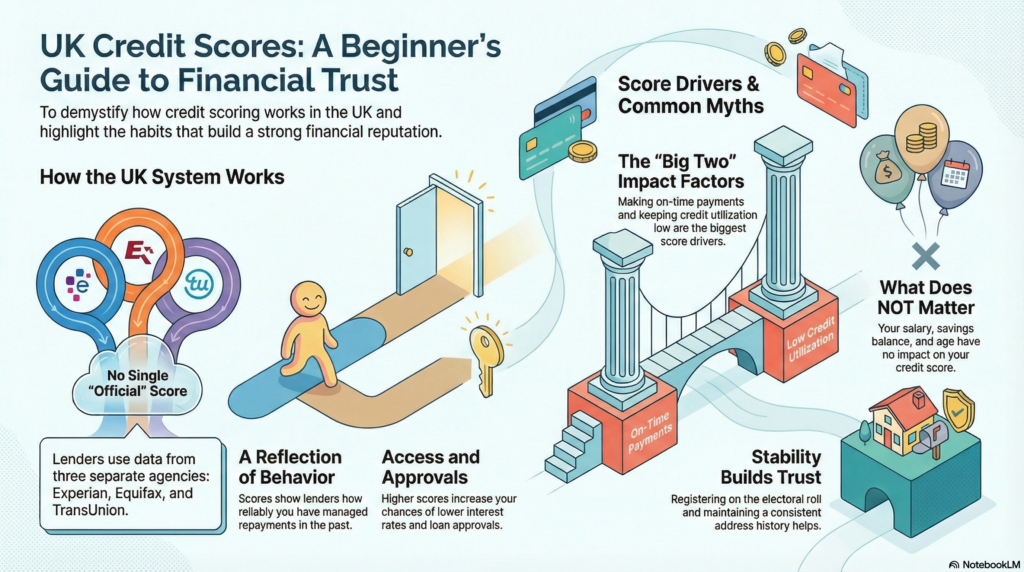
Credit scores are often talked about — but rarely explained properly.
Many people worry about their credit score without understanding what it is, how it works in the UK, or what actually affects it. This guide explains credit scores in simple terms, without jargon or fear.
What Is a Credit Score?
A credit score is a number that helps lenders decide how risky it is to lend you money.
In simple terms, it shows:
- How you’ve managed credit in the past
- How reliable you appear with repayments
A higher score usually means:
- Better chance of approval
- Lower interest rates
Credit Scores in the UK Are Not Universal
One important UK fact:
👉 There is no single “official” credit score in the UK.
Instead, lenders use data from credit reference agencies, each with its own scoring system.
The Main Credit Reference Agencies in the UK
There are three main agencies:
- Experian
- Equifax
- TransUnion
Each one:
- Collects slightly different data
- Uses different score ranges
- May show different scores for the same person
This is normal.
What Affects Your Credit Score?
While each agency scores differently, they generally look at similar factors.
1️⃣ Payment History
- Paying bills on time helps
- Missed or late payments hurt
This is one of the biggest factors.
2️⃣ Credit Utilisation
- How much credit you use compared to your limit
- Using most of your limit can lower your score
Lower usage usually looks safer.
3️⃣ Length of Credit History
- Older accounts help
- Closing accounts can reduce history length
Time matters here.
4️⃣ Credit Applications
- Many applications in a short time can reduce your score
- Each “hard search” leaves a record
Apply only when needed.
5️⃣ Stability & Records
- Being on the electoral register
- Consistent address history
- No unpaid defaults or CCJs
Stability builds trust.
What Does NOT Affect Your Credit Score?
Some common myths:
❌ Your salary
❌ Your savings balance
❌ Your age
❌ Checking your own score
Checking your credit score is safe and free.
What Is a “Good” Credit Score?
Each agency uses different ranges, but generally:
- Low → higher risk
- Average → acceptable
- Good / Excellent → strong
Focus less on the number and more on healthy habits.
Do You Need a Credit Score to Live in the UK?
No.
You can:
- Have a bank account
- Pay bills
- Save money
…without ever using credit.
A credit score becomes relevant when you:
- Apply for a phone contract
- Use a credit card
- Rent certain properties
- Apply for loans or mortgages
How Beginners Can Improve Their Credit Score Safely
You don’t need to rush.
Simple steps:
- Pay all bills on time
- Keep credit use low
- Avoid unnecessary applications
- Check your credit report regularly
- Use credit only if you understand it
There’s no prize for having a perfect score early.
If You’re New to the UK
If you’re new:
- Your credit history may be limited
- That’s normal — not a problem
- Building credit takes time
Start with stability, not borrowing.
Common Beginner Mistakes
- Applying for too many products
- Paying only minimum balances
- Ignoring missed payments
- Believing myths online
Understanding beats optimisation.
Final Thought
A credit score is a reflection of behaviour, not a judgement of worth.
Good habits matter more than numbers.
Why Trust Bright Savings UK?
Bright Savings UK is run by a former banker with over 25 years of experience in the banking and financial services industry. Our goal is to help everyday people save smarter, with clear explanations and practical guidance.
Suggested Internal Links
- Credit Cards Explained: Debit vs Credit [Link]
- What Is Interest? Simple vs Compound [Link]
- 7 Money Mistakes Young People Make [Link]
How We Monetize This Site
To support the research and running of Bright Savings UK, we use two primary methods of monetization:
- Affiliate Links: Some links on this site are affiliate links. If you click and open an account, we may receive a commission. This does not change the price or terms you receive from the provider.
- Display Advertising: We host third-party advertisements through Google AdSense. We do not directly control the specific products shown in these ad units, and their presence does not constitute an endorsement by Bright Savings UK.
Disclaimer: This article is for educational purposes only and does not constitute financial advice. Always review provider terms directly before applying.