
Should Students Use Credit Cards? A Practical UK Guide (2026)
Transparency Disclosure: To keep our guides free for everyone, this post contains affiliate links and display advertisements. If you click an affiliate link and sign up, we may earn a commission at no extra cost to you. As an ex-banker with 25 years of experience, I only recommend tools that I believe provide genuine value to your financial health. Read our full Affiliate Disclosure here.
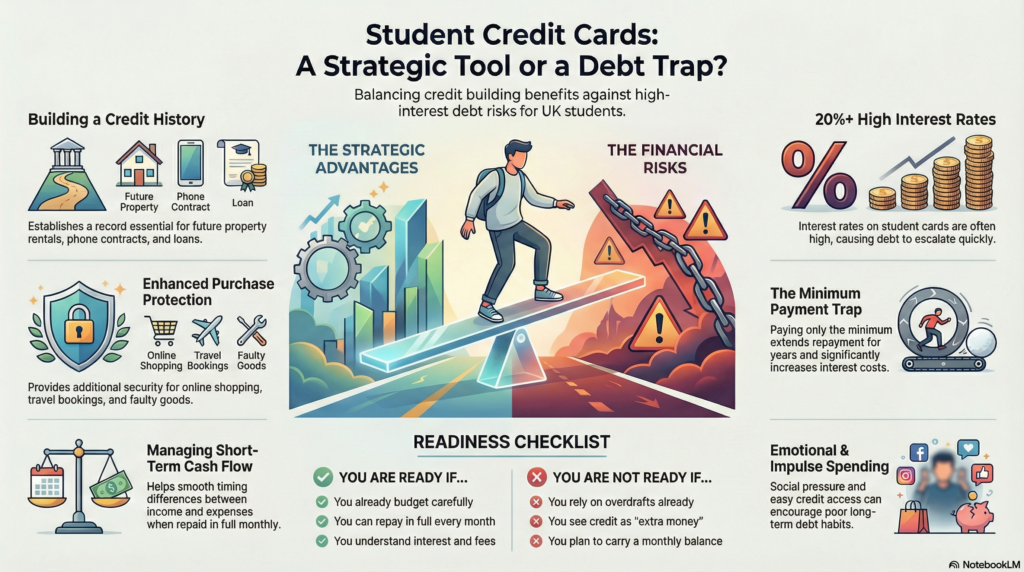
Starting university often means managing money independently for the first time. At some point, many students ask:
Should I get a credit card?
The honest answer is: it depends on how you plan to use it.
Credit cards can be helpful tools — but they can also cause long-term financial stress if misunderstood. This guide explains both sides clearly so you can decide responsibly.
What Is a Student Credit Card?
A student credit card is a credit card designed for people with little or no credit history.
It usually offers:
- A lower credit limit
- Basic features
- Higher interest rates than standard cards
It is still borrowing money — not free spending.
Why Some Students Choose to Use Credit Cards
There are legitimate reasons students consider credit cards.
1️⃣ Building a Credit History
Using a credit card responsibly (and paying in full) can help build a credit record, which may be useful later for:
- Renting property
- Phone contracts
- Future loans
2️⃣ Purchase Protection
Credit cards often provide additional protection for:
- Online purchases
- Faulty goods
- Travel bookings
This can be useful for larger purchases.
3️⃣ Managing Cash Flow
If used carefully and repaid in full each month, a credit card can help smooth short-term timing differences between income and expenses.
But this requires discipline.
The Risks Students Must Understand
Credit cards are not “extra income.” They are short-term loans.
⚠️ High Interest Rates
Student cards often have interest rates above 20%.
If you only pay the minimum, debt can grow quickly.
⚠️ Minimum Payment Trap
Paying only the minimum:
- Extends repayment for years
- Costs significantly more in interest
- Can create long-term debt habits
⚠️ Emotional Spending
University life includes:
- Social pressure
- Travel opportunities
- Online shopping temptation
Easy access to credit can encourage impulse decisions.
When a Student Credit Card Might Be Appropriate
It may make sense if:
✔ You already budget carefully
✔ You can repay the balance in full every month
✔ You want to build credit slowly
✔ You understand interest and fees
It may not be suitable if:
❌ You struggle with budgeting
❌ You rely on overdrafts already
❌ You plan to carry a balance
❌ You see it as “extra money”
Alternatives to Consider First
Before applying, ask yourself if you really need one.
Alternatives include:
- Using a debit card
- Building an emergency fund
- Setting up spending alerts
- Using budgeting apps
- Saving before purchasing
For many students, a debit card and good budgeting are enough.
A Simple Rule for Students
If you decide to get a credit card, follow this rule:
Only spend what you already have in your bank account.
Treat it like a debit card — just with extra protection.
If you cannot pay the full balance at the end of the month, reconsider using it.
Should International Students Apply?
International students may find it harder to qualify due to limited UK credit history.
If you’re new to the UK:
- Focus first on stability (bank account, address, consistent payments)
- Avoid rushing into borrowing
- Build financial foundations before using credit
Final Thought
A credit card is neither good nor bad.
It is a financial tool.
For disciplined students, it can help build credit history responsibly.
For others, it can create unnecessary stress and debt.
The smartest decision is the one that fits your habits — not what friends are doing.
Why Trust Bright Savings UK?
Bright Savings UK is run by a former banker with over 25 years of experience in the banking and financial services industry. Our goal is to help everyday people save smarter, with clear explanations and practical guidance.
Suggested Internal Links
- Credit Cards Explained: Debit Cards, Interest, Pros & Cons [Link]
- How Credit Scores Work in the UK [Link]
- How to Budget Your Money for the First Time [Link]
How We Monetize This Site
To support the research and running of Bright Savings UK, we use two primary methods of monetization:
- Affiliate Links: Some links on this site are affiliate links. If you click and open an account, we may receive a commission. This does not change the price or terms you receive from the provider.
- Display Advertising: We host third-party advertisements through Google AdSense. We do not directly control the specific products shown in these ad units, and their presence does not constitute an endorsement by Bright Savings UK.
Disclaimer: This article is for educational purposes only and does not constitute financial advice. Always review provider terms directly before applying.
Good
Thanks!