
Inflation, Interest Rates, and Your Savings: What UK Savers Need to Know (2026)
Transparency Disclosure: To keep our guides free for everyone, this post contains affiliate links and display advertisements. If you click an affiliate link and sign up, we may earn a commission at no extra cost to you. As an ex-banker with 25 years of experience, I only recommend tools that I believe provide genuine value to your financial health. Read our full Affiliate Disclosure here.
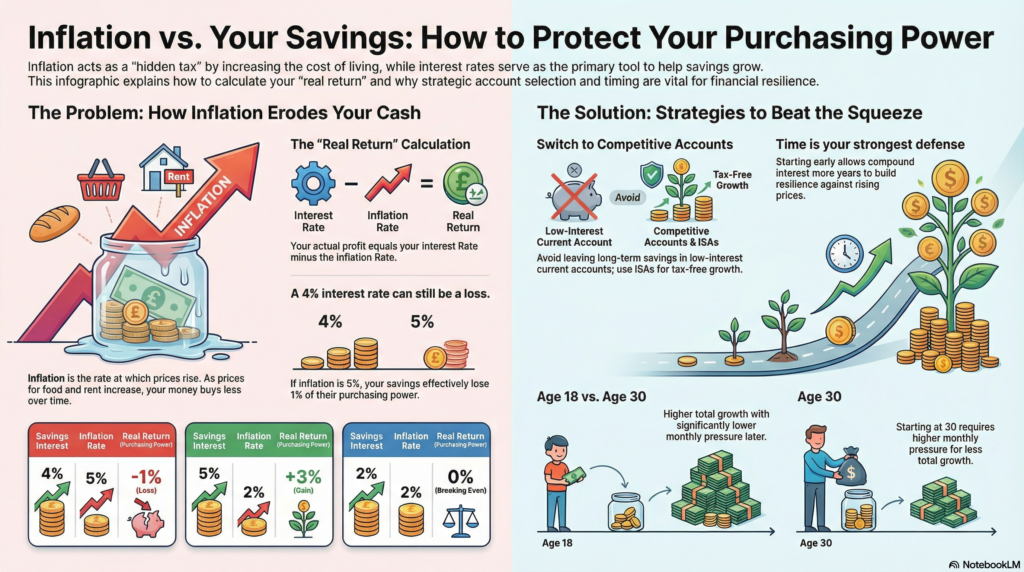
You often hear “inflation is rising” or “interest rates are high”, but what impact does that have on your savings?
This guide explains inflation and interest rates in simple terms, how they interact, and why they matter for anyone trying to save money in the UK.
What Is Inflation?
Inflation is the rate at which prices increase over time.
In simple terms:
- £10 today buys less in the future
- Food, transport, rent, and bills gradually cost more
If inflation is 5%, something that costs £100 today may cost £105 next year.
Inflation is tracked nationally and influenced by economic conditions and policies set by institutions such as the Bank of England [Link].
What Is an Interest Rate?
An interest rate is how much your money:
- earns when you save
- or costs when you borrow
For savers, interest is the reward banks pay you for keeping money with them.
Example:
- £1,000 saved at 4% interest earns £40 in a year (before tax).
How Inflation and Interest Rates Are Connected
Inflation and interest rates are closely linked.
When inflation rises:
- Central banks may increase interest rates
- Borrowing becomes more expensive
- Saving becomes more rewarding
When inflation falls:
- Interest rates may be lowered
- Borrowing becomes cheaper
- Savings earn less interest
The goal is to keep inflation under control without damaging the economy.
The Key Question for Savers: Are You Beating Inflation?
What really matters is real return, not just interest.
Real Return = Interest Rate − Inflation Rate
Example:
- Savings interest: 4%
- Inflation: 5%
👉 Your savings are losing 1% of purchasing power, even though the balance is growing.
This is why understanding inflation is so important.
How Inflation Affects Your Savings
1️⃣ Cash Loses Value Over Time
Money sitting in low-interest accounts can slowly lose buying power.
2️⃣ Low Interest = Hidden Loss
If your savings earn less than inflation, you’re effectively getting poorer in real terms.
3️⃣ Long-Term Impact
Over many years, inflation can significantly reduce what your savings can buy.
How Interest Rates Can Help Savers
Higher interest rates can:
- Help offset inflation
- Reward people who save consistently
- Encourage better saving habits
However, not all accounts increase rates equally — some savings accounts lag behind.
How to Protect Your Savings from Inflation
You don’t need complex strategies. Start with basics:
✔ Use savings accounts that pay competitive interest
✔ Review your savings rate regularly
✔ Avoid keeping long-term savings in current accounts
✔ Understand whether your money is easy-access or fixed
✔ Consider tax-free options like ISAs where appropriate
The goal isn’t to “beat inflation perfectly” — it’s to reduce its impact.
Why Starting Early Matters Even More During Inflation
When inflation exists (and it always does):
- Time becomes more important
- Compound interest needs longer to work
- Delaying saving means losing years of growth
Starting early helps your money:
- Grow alongside rising prices
- Build resilience against cost increases
- Reduce future financial pressure
A Simple Example
Two people save £50 a month:
- Person A starts at 18
- Person B starts at 30
Even with inflation, Person A benefits from:
- More years of compounding
- Higher total growth
- Lower monthly pressure later
Time is your strongest defence.
Common Mistakes to Avoid
❌ Leaving savings in a current account long-term
❌ Ignoring interest rates entirely
❌ Assuming inflation “doesn’t matter”
❌ Chasing high rates without understanding access rules
Understanding the basics already puts you ahead.
Final Thought
Inflation quietly affects everyone — savers included.
Interest rates are one of the main tools that can help protect your money, but only if you choose the right place to keep it.
You don’t need to predict the economy.
You just need to:
- Understand the basics
- Start early
- Review occasionally
That alone can make a meaningful difference to your financial future.
Why Trust Bright Savings UK?
Bright Savings UK is run by a former banker with over 25 years of experience in the banking and financial services industry. Our goal is to help everyday people save smarter, with clear explanations and practical guidance.
Suggested Internal Links
- What Is Interest? Simple vs Compound [Link]
- Why Starting to Save at 18 Beats Saving More at 30 [Link]
- What Is a Bank Account? A Simple Beginner’s Guide [Link]
How We Monetize This Site
To support the research and running of Bright Savings UK, we use two primary methods of monetization:
- Affiliate Links: Some links on this site are affiliate links. If you click and open an account, we may receive a commission. This does not change the price or terms you receive from the provider.
- Display Advertising: We host third-party advertisements through Google AdSense. We do not directly control the specific products shown in these ad units, and their presence does not constitute an endorsement by Bright Savings UK.
Disclaimer: This article is for educational purposes only and does not constitute financial advice. Always review provider terms directly before applying.