
Average Graduate Salary in the UK
Transparency Disclosure: To keep our guides free for everyone, this post contains affiliate links and display advertisements. If you click an affiliate link and sign up, we may earn a commission at no extra cost to you. As an ex-banker with 25 years of experience, I only recommend tools that I believe provide genuine value to your financial health. Read our full Affiliate Disclosure here.
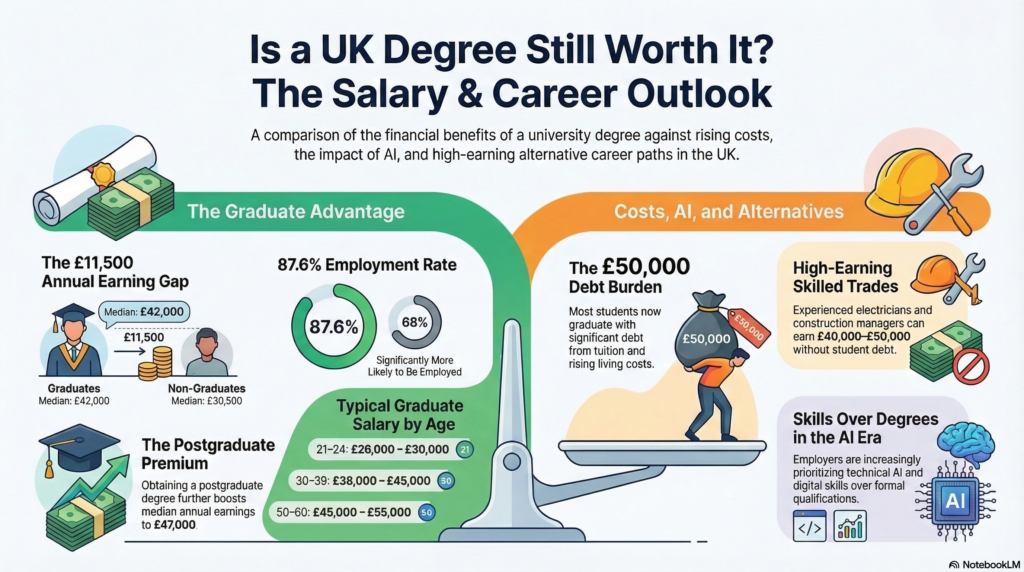
According to data from the UK Government graduate labour market statistics (Calendar year 2024) [Link]:
- The median salary for working-age graduates is about £42,000.
- Graduates earn significantly more than non-graduates, whose median salary is about £30,500.
- Postgraduates earn even more, with a median salary of £47,000.
This means the typical graduate earns roughly £11,000 more per year than someone without a degree.
Average UK Graduate Salary by Age
Graduate salaries usually increase steadily as experience grows.
Typical salary progression looks like this:
| Age | Typical Graduate Salary |
| 21–24 | £26,000 – £30,000 |
| 25–29 | £30,000 – £36,000 |
| 30–39 | £38,000 – £45,000 |
| 40–49 | £45,000 – £50,000+ |
| 50–60 | £45,000 – £55,000 |
Entry-level graduate jobs typically offer around £30,000 per year, although salaries vary widely depending on industry and location.
For example:
- Technology and finance roles can exceed £35,000–£40,000 starting salaries
- Some investment banking roles start above £50,000
- Many public sector or creative roles start closer to £25,000–£28,000
Graduate Employment Advantage
Despite concerns about the job market, graduates still have strong employment outcomes.
Government statistics show:
- 87.6% of graduates are employed, compared with around 68% of non-graduates.
- Graduates are far more likely to work in high-skilled jobs.
In other words, while a degree does not guarantee success, it significantly improves employment prospects.
Rising Costs of University
However, the financial burden of university has grown.
Students today face:
- £9,250 annual tuition fees
- rising accommodation costs
- high student loan balances
Many graduates leave university with £45,000–£50,000 in debt.
This raises concerns about whether the financial return on a degree is declining.
The Impact of artificial intelligence (AI) on Graduate Jobs
Another major concern is the rapid growth of artificial intelligence.
AI is already changing the labour market in several ways:
- automating routine office work
- reducing demand for entry-level administrative jobs
- increasing demand for technical and digital skills
Some studies suggest employers are beginning to prioritise specific skills over formal degrees, especially in fields like AI and technology.
However, AI is also creating new high-paying jobs, particularly in: data science, software engineering, machine learning and cybersecurity.
Graduates with the right technical skills may benefit from these changes.
The Growing Demand for Skilled Trades
While many people focus on university education, the UK is also experiencing shortages of skilled blue-collar workers, such as electricians, plumbers, construction workers, engineers and mechanics.
These careers can offer strong earnings without student debt.
For example:
- experienced electricians often earn £40,000–£50,000
- construction managers can earn £50,000+
As a result, more young people are considering apprenticeships or vocational training instead of traditional university degrees.
So Is University Still Worth It?
The answer is not the same for everyone.
While salary and job prospects are important considerations, choosing a university degree purely based on income potential may not lead to long-term satisfaction.
Young people should also think carefully about what they are genuinely interested in.
When you work in a field that truly interests you, you are more likely to:
- stay motivated
- continue improving your skills
- perform better in your career
- find long-term satisfaction in your work
Without passion in your job, even a high salary may not bring real happiness.
For many people, building a meaningful career is about finding the balance between financial stability and personal fulfilment.
The Future of Work Is Uncertain
Another important factor is the rapid advancement of AI and new technologies. AI is already transforming industries such as:
- finance
- technology
- customer service
- marketing
- healthcare
However, no one can truly predict how far AI will advance or which jobs will change in the future.
Some roles may disappear, while completely new careers may emerge.
Because of this uncertainty, the most valuable skill today may not simply be a university degree, but rather the ability to keep learning and adapting throughout life.
The Importance of Lifelong Learning
In today’s economy, careers are rarely fixed for life.
Many professionals will change roles or even entire industries several times during their careers.
Developing the ability to learn new skills quickly has therefore become extremely important.
Successful people often share several habits:
- continuous learning
- adapting to new technologies
- improving their skills regularly
- staying curious about the world
This mindset is often described as lifelong learning.
Whether someone chooses university, vocational training, or apprenticeships, those who continue learning will usually have the best long-term opportunities.
Stay Adaptable and Optimistic
Mindset also plays an important role.
The future job market will continue evolving, and uncertainty is unavoidable.
Instead of fearing change, young people may benefit from:
- staying adaptable
- embracing new technologies
- maintaining an optimistic outlook
- developing practical skills
Opportunities will continue to exist for people who are willing to learn, adapt, and work hard.
Building Financial Stability Along the Way
Regardless of the career path someone chooses, developing strong financial habits early in life is equally important.
Graduates or young professionals can build financial stability by:
- creating an emergency savings fund
- learning how to budget
- using high-interest savings accounts
- taking advantage of tax-efficient accounts like ISAs
Starting small but saving consistently can make a significant difference over time.
Even modest monthly savings can grow steadily when combined with compound interest and long-term discipline.
The Bottom Line
University can still be a valuable investment, but it is not the only path to success.
For many people, long-term success depends on:
- choosing work that genuinely interests them
- continuously developing new skills
- adapting to a changing economy
- building healthy financial habits
With the right mindset and consistent effort, it is still possible to build a meaningful career and strong financial future in the UK.
Why Trust Bright Savings UK?
Bright Savings UK is run by a former banker with over 25 years of experience in the banking and financial services industry. Our goal is to help everyday people save smarter, with clear explanations and practical guidance.
Suggested Internal Links
- Average UK Student Debt (2026): How Much Do Graduates Really Owe? [Link]
- The Most Important Investment in Life Is Your Health [Link]
- The 50/30/20 Budget Rule Explained for UK Beginners [Link]
How We Monetize This Site
To support the research and running of Bright Savings UK, we use two primary methods of monetization:
Display Advertising: We host third-party advertisements through Google AdSense. We do not directly control the specific products shown in these ad units, and their presence does not constitute an endorsement by Bright Savings UK.
Affiliate Links: Some links on this site are affiliate links. If you click and open an account, we may receive a commission. This does not change the price or terms you receive from the provider.
Disclaimer: This article is for educational purposes only and does not constitute financial advice. Always review provider terms directly before applying.