
Best Ways to Save Money on Groceries in the UK (2026 Guide)
Transparency Disclosure: To keep our guides free for everyone, this post contains affiliate links and display advertisements. If you click an affiliate link and sign up, we may earn a commission at no extra cost to you. As an ex-banker with 25 years of experience, I only recommend tools that I believe provide genuine value to your financial health. Read our full Affiliate Disclosure here.
Food is one of the biggest monthly expenses for households in the UK. With rising food prices and inflation in recent years, many people are looking for ways to reduce their grocery bills without sacrificing quality.
The good news is that with a few simple strategies, you can cut your grocery spending by £30–£100 per month.
Here are some of the most effective ways to save money on groceries in the UK.
1. Shop at Discount Supermarkets
One of the easiest ways to save money is choosing lower-cost supermarkets.
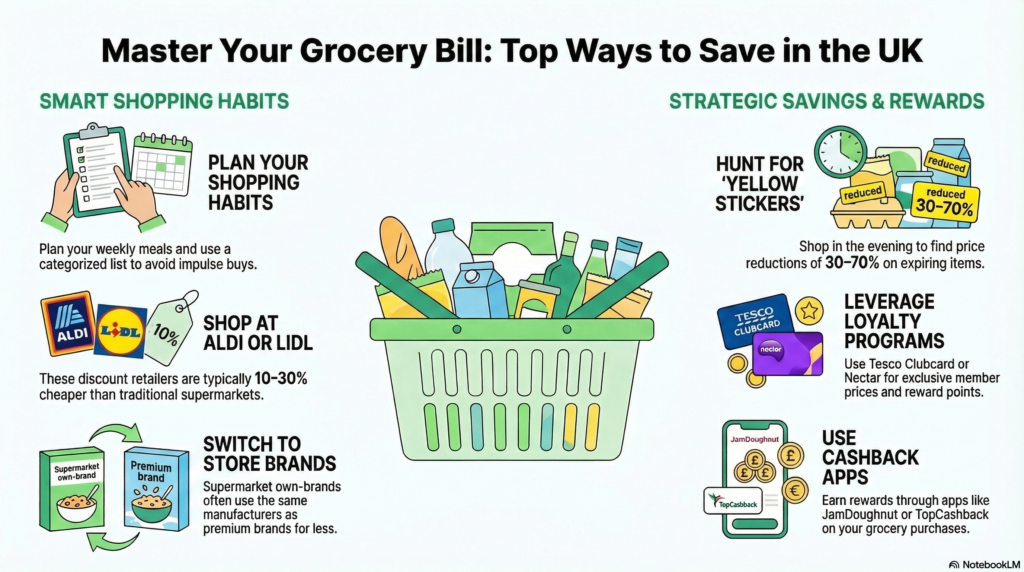
Discount chains such as Aldi and Lidl often offer groceries that are significantly cheaper than traditional supermarkets.
Many independent price comparisons regularly show these retailers offering the lowest overall basket prices in the UK.
Typical savings:
- 10–30% cheaper than larger supermarkets
- strong value on fresh produce and basic staples
For everyday groceries, these stores can help reduce your weekly food bill immediately.
2. Use Supermarket Loyalty Cards
Loyalty programs provide discounts, points, or cashback on everyday shopping.
Popular UK supermarket programs include:
- Tesco Clubcard
- Nectar Card used by Sainsbury’s
- myWaitrose
Benefits can include:
- exclusive member prices
- reward points
- personalised offers
Over time, these small savings can add up.
3. Plan Your Meals Before Shopping
Impulse buying is one of the biggest reasons grocery bills increase.
A simple strategy is to plan meals for the week before going to the supermarket.
Benefits include:
- buying only what you need
- reducing food waste
- avoiding unnecessary snacks or convenience foods
Many households find this method alone can cut their grocery spending by 15–20%.
4. Shop with a Grocery List
Supermarkets are designed to encourage impulse purchases.
Creating a shopping list and sticking to it helps control spending.
A good approach is to divide your list into categories:
- fresh produce
- dairy
- pantry staples
- frozen items
This also helps you shop faster and avoid wandering through aisles unnecessarily.
5. Take Advantage of Yellow Sticker Discounts
Many supermarkets reduce prices on food close to its expiration date.
These discounts are often marked with yellow stickers and can offer savings of 30–70%.
You can find these deals in the evening at supermarkets like:
- Tesco
- Sainsbury’s
- Morrisons
Buying discounted items and freezing them can significantly reduce grocery costs.
6. Buy Supermarket Own-Brand Products
Many supermarket own-brand products are produced by the same manufacturers as premium brands, but sold at lower prices.
Switching to store brands can reduce costs on items such as:
- pasta
- canned food
- cereals
- dairy products
In blind taste tests, many shoppers find little difference in quality.
7. Use Cashback and Rewards Apps
Cashback apps allow you to earn small rewards when shopping.
Examples include:
JamDoughnut – cashback when purchasing supermarket gift cards
👉 Sign up here: [Link]
👉 Use referral code: 6CCP
TopCashback – cashback on online grocery purchases
Sign up for TopCashback here to start stacking your bonuses. New members joining TopCashback through a referral link can receive £15 sign-up bonus. [Link]
These platforms can return a small percentage of your spending, helping lower the effective cost of groceries.
8. Avoid Shopping When Hungry
This may sound simple, but it works.
Shopping while hungry increases the chance of buying:
- snacks
- ready meals
- unnecessary treats
Many shoppers notice they spend significantly more when shopping on an empty stomach.
9. Compare Prices Online
Many UK supermarkets offer online price comparisons.
For example, some retailers match prices with competitors such as Aldi.
You can also compare product prices through supermarket websites before shopping to find the best deals.
10. Reduce Food Waste at Home
A surprising amount of food is wasted in many households.
Simple habits can help:
- store food properly
- freeze leftovers
- rotate older items to the front of the fridge
- cook larger meals and use leftovers
Reducing waste means buying fewer groceries overall.
Final Thoughts
Saving money on groceries doesn’t require extreme budgeting. Small habits can make a big difference over time.
The most effective strategies include:
- shopping at discount supermarkets
- using loyalty programs
- planning meals
- buying store brands
- using cashback tools
By combining several of these methods, many UK households can save hundreds of pounds per year on food shopping.
Why Trust Bright Savings UK?
Bright Savings UK is run by a former banker with over 25 years of experience in the banking and financial services industry. Our goal is to help everyday people save smarter, with clear explanations and practical guidance.
Suggested Internal Links
- Is TopCashback Worth It in 2026? A Beginner’s Guide for UK Savers [Link]
- How to Earn £100–£300 Opening a UK Bank Account (2026 Cashback Guide) [Link]
- The 50/30/20 Budget Rule Explained for UK Beginners (2026 Guide) [Link]
How We Monetize This Site
To support the research and running of Bright Savings UK, we use two primary methods of monetization:
Display Advertising: We host third-party advertisements through Google AdSense. We do not directly control the specific products shown in these ad units, and their presence does not constitute an endorsement by Bright Savings UK.
Affiliate Links: Some links on this site are affiliate links. If you click and open an account, we may receive a commission. This does not change the price or terms you receive from the provider.
Disclaimer: This article is for educational purposes only and does not constitute financial advice. Always review provider terms directly before applying.