
Average Debt in the UK by Age (2026): Are You Ahead or Behind?
Transparency Disclosure: To keep our guides free for everyone, this post contains affiliate links and display advertisements. If you click an affiliate link and sign up, we may earn a commission at no extra cost to you. As an ex-banker with 25 years of experience, I only recommend tools that I believe provide genuine value to your financial health. Read our full Affiliate Disclosure here.
Many newcomers moved to the UK; they are surprised by how much the British economy runs on credit. Coming from a 25-year career in international banking, I know how the systems worked, but seeing it as a newcomer is eye-opening.
Many international students and new arrivals feel a sense of “debt-panic” when they see the cost of living and the availability of credit cards, car finance, and “Buy Now, Pay Later” schemes.
To manage your money effectively, you need to know what the national benchmarks are. Here is the reality of average debt in the UK by age group as we head into 2026.
The National Snapshot: Unsecured Debt
In the UK, we distinguish between secured debt (like a mortgage) and unsecured debt (credit cards, personal loans, and overdrafts). For most young people and newcomers, unsecured debt is the primary concern.
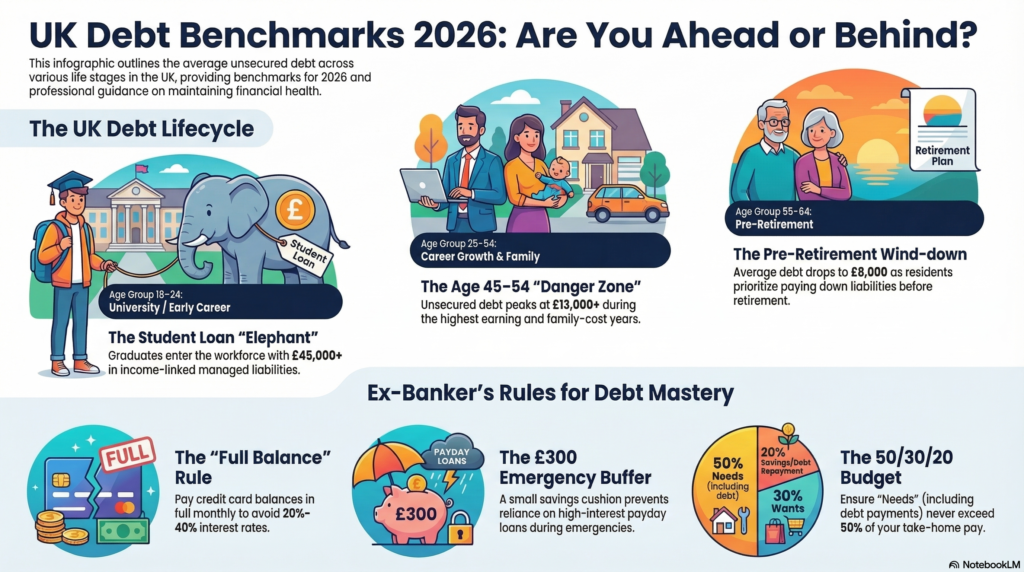
| Age Group | Typical Financial Stage | Average Unsecured Debt |
| 18–24 | University / Early Career | £45,000+ (Primarily Student Loans) |
| 25–34 | Early Career / Flat Rentals | £4,500 – £6,500 |
| 35–44 | Family Growth / Peak Expenses | £10,000 – £12,000 |
| 45–54 | Peak Earning Years | £13,000+ |
| 55–64 | Pre-Retirement / Paying Down | £8,000 (and dropping) |
A Closer Look: The “Debt Lifecycle”
1. The 18–24 Milestone: The Student Loan “Elephant”
As my guide on Average UK Student Debt explains, graduates in England now enter the workforce with roughly £45,000 to £50,000 in debt.
- The Ex-Banker’s View: Don’t let this massive number scare you. Because repayments are linked to your income, this debt doesn’t behave like a bank loan. It is a “managed liability.” Your focus at this age should be on avoiding overdrafts and high-interest retail credit, not just staring at your student loan balance.
2. The 25–34 Phase: The “Credit Building” Era
This is the age where credit card usage begins to climb. The average debt of £4,500–£6,500 often stems from furnishing new flats or financing a first car.
- The 2021 Insight: When I arrived in 2021, I saw how easily “lifestyle creep” happens. My advice? Use credit only as a tool to build your Trust Score (Credit Score), not as a way to fund a lifestyle you haven’t earned yet.
3. The 35–54 Peak: The Danger Zone
This age bracket sees the highest debt levels. Why? Mortgages are at their largest, and “unsecured” debt often peaks due to family costs and home improvements.
- The Ex-Banker’s Warning: This is where the 50/30/20 budget is most tested. If your unsecured debt is climbing above £10,000, your interest payments are likely eating into your ability to save for retirement.
3 Ways to Stay Below the UK Average
1. The “Full Balance” Rule
In my guide to Credit Cards Explained, I emphasize one golden rule: Pay your full balance every month. The average UK credit card interest rate is between 20% and 40%. If you only pay the minimum, you aren’t paying off debt; you are just giving the bank a gift.
2. Build Your “Emergency Buffer” First
Most debt happens because of an emergency. As my file on Emergency Funds on a Low Income [Link] highlights, having even £300 tucked away can prevent you from needing a high-interest payday loan or credit card cash advance when things go wrong.
3. Separate “Needs” from “Wants”
Use the 50/30/20 rule [Link] to ensure that your debt payments (the “Needs” category) never exceed 50% of your take-home pay. If they do, it’s time to audit your subscriptions and lifestyle spending.
Final Thought from Bright Savings UK
Debt is a tool. In 25 years of banking, I’ve seen it help people buy homes and start businesses. But I’ve also seen it become a heavy weight.
Whether you are a student, a newcomer who arrived in 2021 like me, or a long-term UK resident, the goal is simple: Be the master of your debt, not the servant to it.
Why Trust Bright Savings UK?
Bright Savings UK is run by a former banker with over 25 years of experience in the banking and financial services industry. Our goal is to help everyday people save smarter, with clear explanations and practical guidance.
Suggested Internal Links
- Average UK Student Debt (2026): How Much Do Graduates Really Owe? [Link]
- Bright Spending: How to Use Debit and Credit Cards Wisely in the UK (2026) [Link]
- How Credit Scores Work in the UK (Beginner Guide 2026) [Link]
How We Monetize This Site
To support the research and running of Bright Savings UK, we use two primary methods of monetization:
- Affiliate Links: Some links on this site are affiliate links. If you click and open an account, we may receive a commission. This does not change the price or terms you receive from the provider.
- Display Advertising: We host third-party advertisements through Google AdSense. We do not directly control the specific products shown in these ad units, and their presence does not constitute an endorsement by Bright Savings UK.
Disclaimer: This article is for educational purposes only and does not constitute financial advice. Always review provider terms directly before applying.