
How to Use the Financial Snowball Effect to Build Wealth
Transparency Disclosure: To keep our guides free for everyone, this post contains affiliate links and display advertisements. If you click an affiliate link and sign up, we may earn a commission at no extra cost to you. As an ex-banker with 25 years of experience, I only recommend tools that I believe provide genuine value to your financial health. Read our full Affiliate Disclosure here.
If you’ve ever watched a film set in winter, you’ll know how the classic cartoon snowball works.
It starts as a tiny handful of snow rolled gently across the ground. At first, it seems insignificant.
But as it gathers momentum:
- it picks up more snow
- grows larger
- moves faster
- and eventually becomes a powerful force
Your finances work the same way.
Many people believe financial success only comes from:
- winning the lottery
- earning a huge salary
- receiving an inheritance
- making one perfect investment
But after more than 25 years working in banking and financial services, I’ve seen a different reality repeatedly:
👉 Wealth is usually built through small, consistent financial decisions repeated over time.
At Bright Savings UK, we call this:
The Financial Snowball Effect
Tiny money habits today can quietly shape your financial future for decades.
1. Compound Interest: The Engine Behind the Snowball
The biggest force in long-term wealth building is compound growth.
In simple terms:
👉 your money starts earning money.
Then:
- the growth earns more growth
- which creates even more growth later
Over time, momentum builds.
The Small Step That Changes Everything
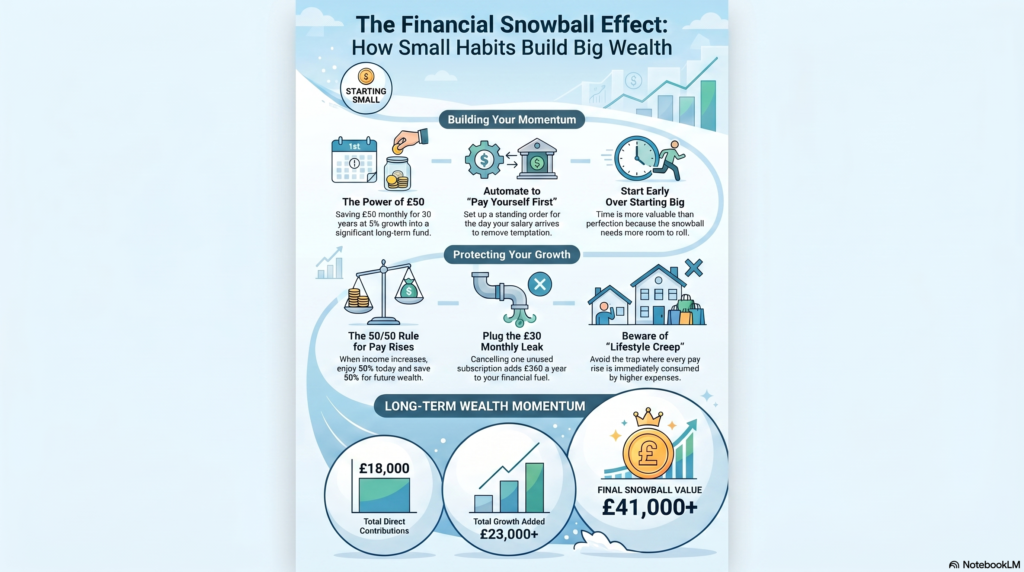
Imagine saving: £50 per month
Over 30 years, your direct contributions would total: 
That’s £18,000 from your own pocket.
But assuming a modest 5% annual return, the final value could grow to:
👉 over £41,000
The extra growth comes from:
- time
- consistency
- compounding
Not from doing anything dramatic.
Why Starting Early Matters More Than Starting Big
Many people delay saving because they think:
- “I’ll start later when I earn more.”
But time matters more than perfection.
A small amount invested early often beats a larger amount invested late because the snowball has more time to roll.
2. Auto-Saving: Build Momentum Automatically
One of the biggest financial mistakes people make is:
👉 saving whatever is “left over” at the end of the month.
Usually: nothing is left.
That’s why automation is powerful.
Pay Yourself First
Set up a standing order:
- the same day your salary arrives
- moving money directly into savings
Even:
- £10
- £25
- £50
can begin building momentum.
This removes:
- emotion
- procrastination
- temptation
The process becomes automatic.
The Hidden Advantage of Automation
Over time:
- you adjust naturally to spending slightly less
- your savings quietly grow in the background
Most successful savers don’t rely on motivation. They rely on systems.
3. The “Invisible Spending” Problem
Building wealth is not only about earning more, but also about stopping small leaks.
Many households lose money through:
- forgotten subscriptions
- overpriced broadband
- expensive phone contracts
- unused memberships
- impulse convenience spending
Individually these may seem small.
Combined over years: they become enormous.
Example: The £30 Leak
Finding just: £30 monthly
through cancelling unused spending creates: 
£360 yearly.
Now imagine redirecting that money into:
- an ISA
- savings account
- investment account
- pension
That small leak becomes fuel for your financial snowball.
4. Lifestyle Creep: The Silent Wealth Killer
One of the biggest traps in personal finance is:
lifestyle inflation
Also called: 👉 lifestyle creep.
This happens when every pay rise immediately increases spending.
Examples:
- newer cars
- more expensive holidays
- upgraded phones
- luxury subscriptions
- larger mortgages
As income rises: expenses rise too.
Result:
- income increases
- wealth does not
The 50/50 Rule
A simple strategy:
When your income increases:
- enjoy 50%
- save or invest 50%
Example: £200 monthly pay rise
Use:
- £100 for lifestyle improvements
- £100 for future wealth
This allows:
✅ enjoyment today
✅ financial growth tomorrow
without feeling deprived.
5. Small Habits Become Financial Identity
One underrated truth in finance:
👉 Repeated habits shape identity.
People who consistently:
- budget
- save
- invest
- avoid bad debt
- review spending
gradually become financially stronger over time.
Not because of one perfect decision — but because momentum compounds.
The Banker’s Perspective
After decades working in banking, here is what I’ve learned:
Financial success is usually not about intelligence.
It is more often about:
- consistency
- patience
- risk management
- behaviour
The financially strongest people are often not:
- the highest earners
- the most aggressive investors
They are usually:
- disciplined
- organised
- steady over long periods
That is the real snowball effect.
How to Start Your Financial Snowball This Week
You do not need to change your entire life overnight.
Start with ONE action:
Ideas:
- set up a £10 weekly transfer
- cancel one unused subscription
- switch to a higher savings rate
- reduce takeaway spending by once per week
- pay extra toward high-interest debt
- review your monthly direct debits
Small actions repeated consistently matter far more than occasional dramatic changes.
Final Thoughts
The beauty of the Financial Snowball Effect is that:
👉 it rewards consistency more than perfection.
You do not need:
- huge wealth
- perfect timing
- advanced investing knowledge
You simply need:
- time
- momentum
- good habits
The earlier you start rolling your financial snowball, the more powerful it can eventually become.
And one day, you may look back and realise: the small decisions were never really small at all.
Bright Savings UK Tip
The most important financial habit is not earning more. It is learning how to keep, grow, and manage what you already have. That is where long-term financial security usually begins.
Why Trust Bright Savings UK?
Bright Savings UK is run by a former banker with over 25 years of experience in the banking and financial services industry. Our goal is to help everyday people save smarter, with clear explanations and practical guidance.
Suggested Internal Links
- The £500 Weekend Challenge: How to Audit Your Finances in 2 Hours [Link]
- Get Paid to Shop: Earn Cashback Instantly with JamDoughnut [Link]
- Raisin and Other Savings Platforms in the UK: How They Work, Pros and Cons [Link]
How We Monetize This Site
To support the research and running of Bright Savings UK, we use two primary methods of monetization:
- Affiliate Links: Some links on this site are affiliate links. If you click and open an account, we may receive a commission. This does not change the price or terms you receive from the provider.
- Display Advertising: We host third-party advertisements through Google AdSense. We do not directly control the specific products shown in these ad units, and their presence does not constitute an endorsement by Bright Savings UK.
Disclaimer
Disclaimer: This article is for educational purposes only and does not constitute financial advice. Investing involves risk. Capital is at risk, and you may lose money. Always review provider terms directly before applying.