
Average UK Student Debt (2026): How Much Do Graduates Really Owe?
Transparency Disclosure: To keep our guides free for everyone, this post contains affiliate links and display advertisements. If you click an affiliate link and sign up, we may earn a commission at no extra cost to you. As an ex-banker with 25 years of experience, I only recommend tools that I believe provide genuine value to your financial health. Read our full Affiliate Disclosure here.
Student debt has become one of the biggest financial challenges facing young people in the UK. Many graduates start their careers with tens of thousands of pounds in student loans.
But how much debt does the average UK graduate actually have in 2026? And more importantly, how does student loan repayment really work?
In this guide, we break down the latest statistics and explain what they mean for students and graduates.
Average UK Student Debt in 2026
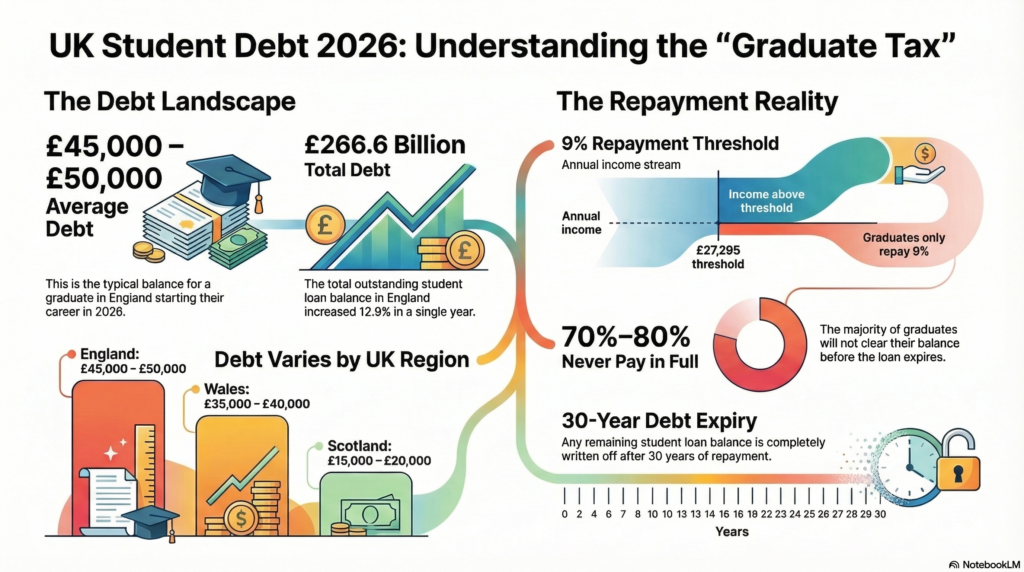
According to data from the Student Loans Company and the UK Government, the average student loan balance for graduates in England is around £45,000 to £50,000.
However, the exact amount depends on:
- tuition fees
- maintenance loans
- length of study
- interest accumulated during study
Typical debt levels include:
| Student Type | Average Debt |
| England graduates | £45,000 – £50,000 |
| Wales graduates | £35,000 – £40,000 |
| Northern Ireland graduates | £25,000 – £30,000 |
| Scotland graduates | £15,000 – £20,000 |
Students in England usually borrow the most because tuition fees can reach £9,250 per year.
Total UK Student Debt Is Rising
Student loans are now one of the largest household debt categories in the UK.
The report from the UK Government and Student Loans Company shows:
- Total outstanding student loan balance in England reached £266.6 billion by March 2025.
- This was up from £236.2 billion the previous year, an increase of about 12.9%.
- Around £20.6 billion in new loans were issued in 2024-25.
Another government forecast shows:
- A typical full-time undergraduate starting in 2024/25 is expected to borrow about £44,690 during their studies.
- They are projected to enter repayment with around £45,600 of debt on average (including interest accrued during study).
Recent figures also suggest that many graduates leave university with balances around £50,000 or more, reflecting rising living costs and borrowing levels
How Student Loan Repayment Works in the UK
Unlike traditional loans, UK student loans function more like a graduate tax.
Repayments depend on income rather than the loan balance.
Most graduates are on Plan 2 loans.
Typical repayment rules:
- Repay 9% of income above £27,295 per year
- Payments are automatically deducted through PAYE
- Remaining balance is written off after 30 years
For example:
If a graduate earns £35,000 per year:
Income above threshold:
£35,000 − £27,295 = £7,705
Annual repayment:
9% × £7,705 = £693 per year
That is about £58 per month.
Interest Rates on Student Loans
Student loan interest is linked to inflation.
Plan 2 loans use the Retail Price Index (RPI) plus up to 3%.
In recent years, high inflation pushed student loan interest rates above 7% at times.
This means balances may continue growing even while repayments are made.
Do Most Graduates Repay Their Student Loans?
Surprisingly, many graduates never fully repay their loans.
Government projections suggest:
- Only 20–30% of graduates repay their loans in full
- Many balances are written off after 30 years
This is why UK student loans are often considered different from normal debt.
The repayment amount depends more on income level than on the original loan amount.
How Student Debt Affects Financial Decisions
Even though repayments are income-based, student loans can still affect financial planning.
Graduates may consider:
- saving for a house deposit
- managing monthly budgets
- building a credit score
- building emergency savings
For many young professionals, developing strong saving habits early becomes important.
Smart Financial Habits for Graduates
Even with student debt, it is still possible to build financial stability.
Key steps include:
Build an Emergency Fund
Having savings helps manage unexpected expenses without relying on credit.
Use High-Interest Savings Accounts
Compare the best savings accounts to grow your money faster.
Start Using ISAs Early
Tax-free savings accounts such as Cash ISAs allow your savings to grow without tax on interest.
Track Spending and Budget
Simple budgeting strategies can help balance loan repayments and saving goals.
The Bottom Line
Student debt in the UK is high, with the average graduate owing around £45,000–£50,000.
However, because repayments depend on income, student loans behave differently from traditional debt.
Rather than focusing solely on the balance, graduates should focus on:
- building savings
- improving financial habits
- planning long-term finances
Starting early can make a significant difference to financial stability later in life.
Sources
Data in this article is based on publications from:
- Student Loans Company [Link]
Why Trust Bright Savings UK?
Bright Savings UK is run by a former banker with over 25 years of experience in the banking and financial services industry. Our goal is to help everyday people save smarter, with clear explanations and practical guidance.
Suggested Internal Links
- What Is the Average Savings Amount in the UK by Age? (2026) [Link]
- Why Starting to Save at 18 Beats Saving at 30 [Link]
- The 50/30/20 Budget Rule Explained for UK Beginners [Link]
- Best Student Bank Accounts 2026: Railcards, Sign-Up Bonuses & Real Perks [Link]
How We Monetize This Site
To support the research and running of Bright Savings UK, we use two primary methods of monetization:
Display Advertising: We host third-party advertisements through Google AdSense. We do not directly control the specific products shown in these ad units, and their presence does not constitute an endorsement by Bright Savings UK.
Affiliate Links: Some links on this site are affiliate links. If you click and open an account, we may receive a commission. This does not change the price or terms you receive from the provider.
Disclaimer: This article is for educational purposes only and does not constitute financial advice. Always review provider terms directly before applying.