
Average Wealth in the UK by Age
Transparency Disclosure: To keep our guides free for everyone, this post contains affiliate links and display advertisements. If you click an affiliate link and sign up, we may earn a commission at no extra cost to you. As an ex-banker with 25 years of experience, I only recommend tools that I believe provide genuine value to your financial health. Read our full Affiliate Disclosure here.
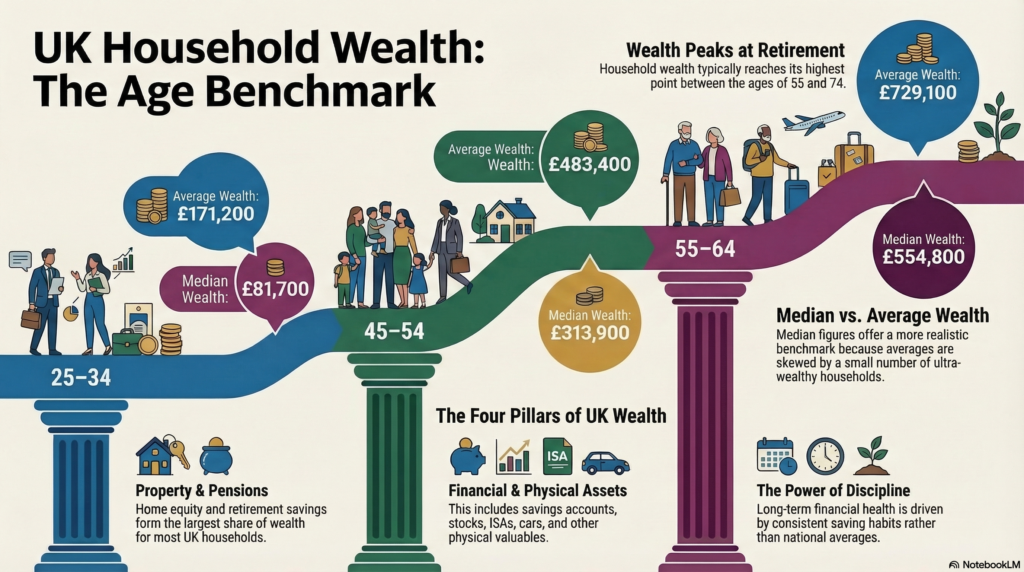
According to the Office for National Statistics Wealth and Assets Survey [Link], wealth increases steadily with age as people accumulate property, pensions, and investments.
However, it is important to look at both average and median wealth:
- Average wealth can be skewed by very wealthy households.
- Median wealth represents the middle household and often gives a more realistic picture.
Below is a comparison of average and median household wealth in the UK by age group.
| Age Group | Average Household Wealth | Median Household Wealth |
| 16–24 | £49,900 | £8,600 |
| 25–34 | £171,200 | £81,700 |
| 35–44 | £322,600 | £216,500 |
| 45–54 | £483,400 | £313,900 |
| 55–64 | £729,100 | £554,800 |
| 65–74 | £722,400 | £502,500 |
Source: ONS Wealth and Assets Survey
Why Median Wealth Matters
The gap between average and median wealth highlights how unevenly wealth is distributed in the UK.
For example:
- The average wealth for people aged 55–64 is about £729,100.
- But the median is closer to £554,800.
This means many households have less wealth than the average, while a smaller number of very wealthy households pull the average higher.
Looking at the median wealth often provides a more realistic benchmark for most people.
What Counts as Wealth?
Total household wealth in the UK generally includes four components:
Property Wealth
Home equity and investment property.
For many households, property is the largest contributor to overall wealth.
Pension Wealth
Workplace pensions and private retirement savings accumulated over a career.
Financial Wealth
Savings accounts, ISAs, stocks, and other investments.
Physical Wealth
Cars, valuables, and other physical assets.
Key Takeaways
Several important trends appear in the data:
• Wealth increases steadily during working years
• It typically peaks around retirement age (55–74)
• Property and pensions form the largest share of wealth for most households
This pattern reflects decades of saving, investing, and paying down mortgages.
The Bigger Picture
While these numbers can provide a useful benchmark, everyone’s financial journey is different.
Your long-term financial health depends more on consistent saving and investing habits than on comparisons with national averages.
Even modest savings can grow significantly over time when combined with compound interest and long-term discipline.
Why Trust Bright Savings UK?
Bright Savings UK is run by a former banker with over 25 years of experience in the banking and financial services industry. Our goal is to help everyday people save smarter, with clear explanations and practical guidance.
Suggested Internal Links
- Average Savings in the UK by Age [Link]
- Average ISA Savings in the UK by Age [Link]
- Average Pension in the UK by Age [Link]
- How Many ISA Millionaires Are There in the UK? (2026 Guide) [Link]
How We Monetize This Site
To support the research and running of Bright Savings UK, we use two primary methods of monetization:
- Affiliate Links: Some links on this site are affiliate links. If you click and open an account, we may receive a commission. This does not change the price or terms you receive from the provider.
- Display Advertising: We host third-party advertisements through Google AdSense. We do not directly control the specific products shown in these ad units, and their presence does not constitute an endorsement by Bright Savings UK.
Disclaimer: This article is for educational purposes only and does not constitute financial advice. Always review provider terms directly before applying.