
Bright Spending: How to Use Debit and Credit Cards Wisely in the UK (2026)
Transparency Disclosure: To keep our guides free for everyone, this post contains affiliate links and display advertisements. If you click an affiliate link and sign up, we may earn a commission at no extra cost to you. As an ex-banker with 25 years of experience, I only recommend tools that I believe provide genuine value to your financial health. Read our full Affiliate Disclosure here.
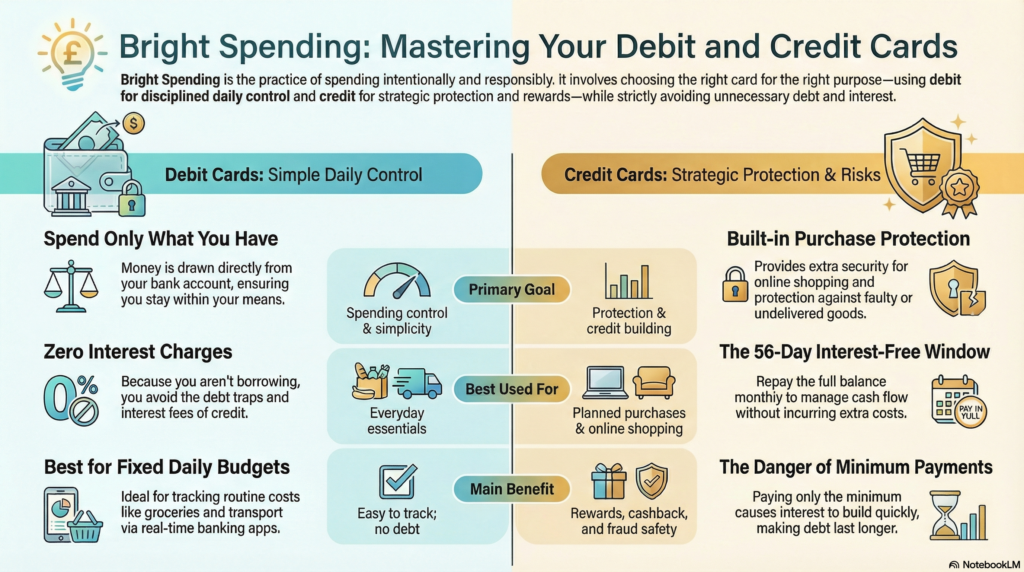
Spending money isn’t the problem — how you spend matters.
Used properly, debit and credit cards can help you stay organised, track spending, and even earn small benefits. Used poorly, they can lead to overdrafts, debt, and stress.
This guide explains how to practise bright spending — spending intentionally and responsibly — using debit and credit cards in the UK.
What Is “Bright Spending”?
Bright spending means:
- Spending within your means
- Using the right card for the right purpose
- Taking advantage of built-in protections and benefits
- Avoiding unnecessary fees and interest
It’s not about spending more — it’s about spending smarter.
Using Debit Cards for Bright Spending
A debit card spends money directly from your bank account.
When Debit Cards Work Best
- Everyday purchases
- Fixed budgets (food, transport)
- When you want to avoid debt completely
Key Benefits of Debit Cards
- You only spend what you have
- Easy to track spending via banking apps
- No interest charges
- Often includes fraud protection
Common Debit Card Features
- Spending notifications
- Daily spending limits
- Card freeze/unfreeze
- Contactless payments
💡 Bright tip:
Debit cards are ideal for beginners who want control and simplicity.
Using Credit Cards for Bright Spending
A credit card lets you borrow money up to a limit, which you repay later.
Used carefully, it can be a useful financial tool — but it requires discipline.
When Credit Cards Make Sense
- Planned purchases you can repay in full
- Building a credit history
- Online shopping with added protection
Typical Benefits Provided by Credit Card Issuers
Many UK credit cards include benefits beyond borrowing:
1️⃣ Purchase Protection
- Protection against faulty or undelivered goods
- Extra security for online purchases
2️⃣ Interest-Free Periods
- Usually up to 56 days if you pay the full balance
- Useful for cash-flow management
3️⃣ Cashback or Rewards
- Small percentage back on spending
- Points or vouchers with some cards
4️⃣ Spending Insights
- Categorised spending reports
- Monthly summaries
- Alerts for unusual activity
5️⃣ Fraud Protection
- Protection against unauthorised transactions
- Ability to freeze cards instantly
The Risk: Minimum Payments and Interest
The biggest danger with credit cards is only paying the minimum.
What happens if you do:
- Interest builds quickly
- Debt lasts much longer
- You pay far more than the original purchase
💡 Bright rule:
If you can’t pay it off in full, think twice before using a credit card.
Debit Card vs Credit Card: Which Is Better?
| Feature | Debit Card | Credit Card |
| Uses your own money | Yes | No (borrowed) |
| Interest charged | No | Yes (if not paid in full) |
| Spending control | High | Requires discipline |
| Extra benefits | Limited | Often included |
| Best for | Daily spending | Planned purchases |
Neither is “better” — they serve different purposes.
Bright Spending Rules to Follow
✔ Use debit cards for daily expenses
✔ Use credit cards only for planned spending
✔ Always check balances and statements
✔ Set spending alerts
✔ Pay credit card balances in full
✔ Avoid impulse spending
These habits matter more than card perks.
Common Beginner Mistakes
❌ Using credit cards as extra income
❌ Ignoring statements
❌ Chasing rewards while carrying debt
❌ Spending without a budget
❌ Mixing savings with spending money
Bright spending starts with awareness.
Final Thought
Debit and credit cards are tools — not shortcuts.
Used wisely, they:
- Help you manage money
- Offer protection and convenience
- Support better financial habits
The goal isn’t to avoid cards — it’s to use them intentionally.
Why Trust Bright Savings UK?
Bright Savings UK is run by a former banker with over 25 years of experience in the banking and financial services industry. Our goal is to help everyday people save smarter, with clear explanations and practical guidance.
Suggested Internal Links
- Credit Cards Explained: Debit vs Credit [Link]
- How Credit Scores Work in the UK [Link]
- How to Budget Your Money for the First Time [Link]
How We Monetize This Site
To support the research and running of Bright Savings UK, we use two primary methods of monetization:
- Affiliate Links: Some links on this site are affiliate links. If you click and open an account, we may receive a commission. This does not change the price or terms you receive from the provider.
- Display Advertising: We host third-party advertisements through Google AdSense. We do not directly control the specific products shown in these ad units, and their presence does not constitute an endorsement by Bright Savings UK.
Disclaimer: This article is for educational purposes only and does not constitute financial advice. Always review provider terms directly before applying.