
Credit Cards Explained: Debit Cards, Interest, Pros & Cons (Beginner Guide 2026)
Transparency Disclosure: To keep our guides free for everyone, this post contains affiliate links and display advertisements. If you click an affiliate link and sign up, we may earn a commission at no extra cost to you. As an ex-banker with 25 years of experience, I only recommend tools that I believe provide genuine value to your financial health. Read our full Affiliate Disclosure here.
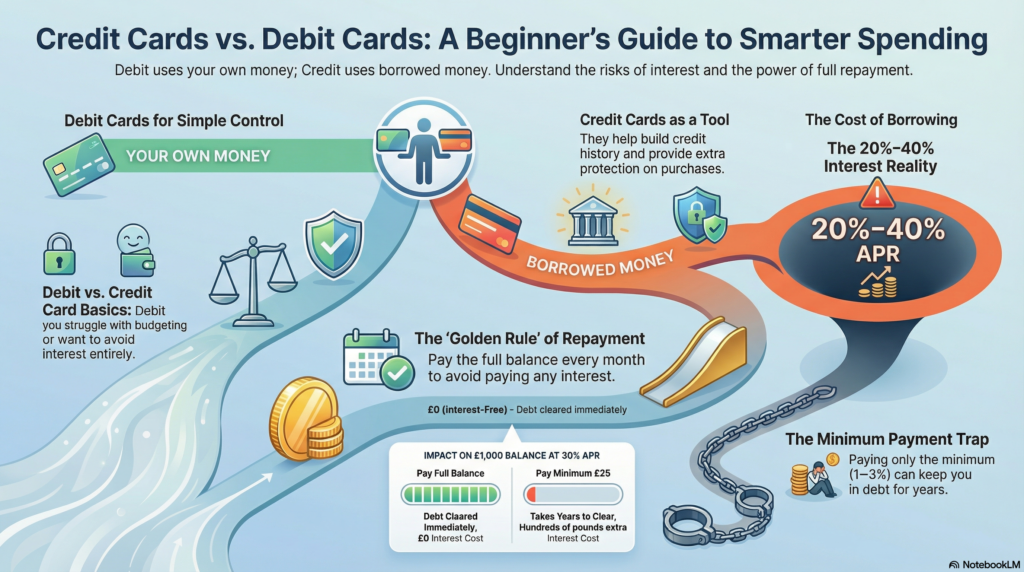
Credit cards are often misunderstood.
Some people avoid them completely. Others use them without fully understanding how interest works — and end up paying far more than expected.
This guide explains credit cards in simple terms, including how they differ from debit cards, how interest works if you only pay the minimum, and the real pros and cons.
Debit Card vs Credit Card: What’s the Difference?
💳 Debit Card
- Uses your own money
- Linked directly to your bank account
- No interest
- You can only spend what you have
👉 Simple and safe for beginners.
💳 Credit Card
- Uses borrowed money
- You repay the card provider later
- Interest may apply
- Comes with rules and risks
👉 Useful if understood — expensive if misunderstood.
How Credit Card Interest Really Works
Credit cards have high interest rates compared to other borrowing.
Interest is shown as APR (Annual Percentage Rate).
Typical UK credit card APR:
- 20% – 40%+
Important rule:
👉 If you pay the full balance every month, you usually pay no interest.
Problems start when you don’t.
What Happens If You Only Pay the Minimum?
Every credit card sets a minimum payment — often:
- 1–3% of the balance, or
- A small fixed amount (e.g. £5–£25)
Example:
- Balance: £1,000
- APR: 30%
- Minimum payment: £25
What happens:
- Most of your payment goes to interest
- The balance reduces very slowly
- You could pay hundreds of pounds extra
- It can take years to clear the debt
📌 Minimum payment keeps you out of trouble — but keeps you in debt.
Pros of Using a Credit Card
Used carefully, credit cards can be helpful.
✅ Advantages
- Builds credit history
- Extra protection on purchases
- Useful for emergencies
- Can help spread short-term costs
- Often safer than carrying cash
When used correctly, a credit card is a tool, not a trap.
Cons of Using a Credit Card
Credit cards are risky if not understood.
❌ Disadvantages
- High interest rates
- Easy to overspend
- Minimum payments hide true cost
- Debt can grow quickly
- Missed payments damage credit score
Credit cards punish mistakes more than debit cards.
When a Credit Card Makes Sense
A credit card may be reasonable if:
- You can pay the full balance every month
- You understand interest rates
- You have an emergency fund
- You track spending carefully
It is not free money.
When a Debit Card Is the Better Choice
A debit card is better if:
- You’re new to managing money
- Your income is irregular
- You struggle with budgeting
- You want simple control
There’s no shame in avoiding credit early.
Common Credit Card Mistakes Beginners Make
- Paying only the minimum
- Using credit for lifestyle spending
- Ignoring interest rates
- Treating credit as income
- Opening cards too early
Understanding these mistakes early saves years of stress.
Simple Rules for Beginners
If you choose to use a credit card:
- Pay the full balance every month
- Never spend what you can’t repay
- Track spending weekly
- Avoid multiple cards early on
If not — stick with debit. That’s perfectly fine.
Final Thought
Credit cards are not good or bad.
They are powerful — and power needs understanding.
If you’re unsure, waiting is often the smartest choice.
Why Trust Bright Savings UK?
Bright Savings UK is run by a former banker with over 25 years of experience in the banking and financial services industry. Our goal is to help everyday people save smarter, with clear explanations and practical guidance.
Suggested Internal Links
- What Is Interest? Simple vs Compound Interest [Link]
- Money Mistakes Young People Make [Link]
- How to Build an Emergency Fund in the UK [Link]
How We Monetize This Site
To support the research and running of Bright Savings UK, we use two primary methods of monetization:
- Affiliate Links: Some links on this site are affiliate links. If you click and open an account, we may receive a commission. This does not change the price or terms you receive from the provider.
- Display Advertising: We host third-party advertisements through Google AdSense. We do not directly control the specific products shown in these ad units, and their presence does not constitute an endorsement by Bright Savings UK.
Disclaimer: This article is for educational purposes only and does not constitute financial advice. Always review provider terms directly before applying.