
How to Budget Your Money for the First Time (Simple UK Guide 2026)
Transparency Disclosure: To keep our guides free for everyone, this post contains affiliate links and display advertisements. If you click an affiliate link and sign up, we may earn a commission at no extra cost to you. As an ex-banker with 25 years of experience, I only recommend tools that I believe provide genuine value to your financial health. Read our full Affiliate Disclosure here.
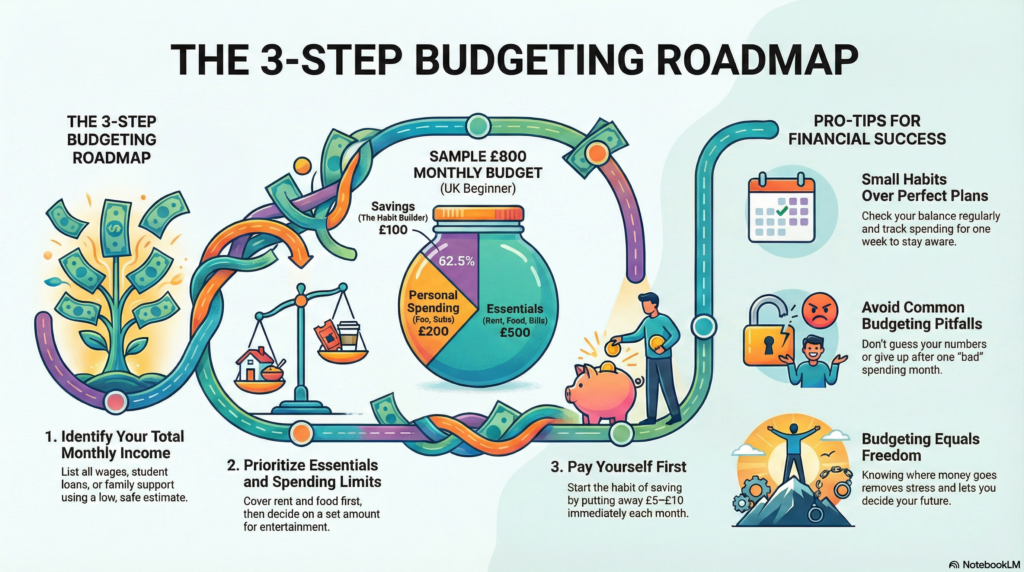
If you’ve never budgeted before, the word itself can sound scary or restrictive.
In reality, budgeting isn’t about saying no to everything — it’s about knowing where your money goes so you don’t feel stressed or surprised later.
This guide is written for beginners, especially if you’re:
- Aged 16–24
- A student
- New to the UK
- Just starting to manage your own money
What Does “Budgeting” Actually Mean?
A budget is simply a plan for your money.
It answers three basic questions:
- How much money do I get?
- What do I need to pay for?
- How much can I safely spend or save?
That’s it. No maths degree needed.
Why Budgeting Matters (Even If You Don’t Earn Much)
Many people think budgeting is only for people with big salaries.
In fact, budgeting is more important when money is tight.
It helps you:
- Avoid running out of money
- Reduce stress
- Build confidence
- Start saving (even small amounts)
Step 1: Know Your Monthly Income
Write down how much money you receive each month, for example:
- Part-time job wages
- Student loan or allowance
- Family support
If your income changes, estimate a low, safe amount.
Step 2: List Your Essential Expenses
These are things you must pay for:
- Rent or accommodation
- Transport
- Phone bill
- Food
Be honest — budgeting only works if the numbers are real.
Step 3: Set a Spending Limit (Not a Ban)
This includes:
- Eating out
- Subscriptions
- Shopping
- Entertainment
You’re not banning fun — you’re deciding in advance how much is okay.
Step 4: Pay Yourself First (Even £10 Counts)
Saving doesn’t require big money.
Start with:
- £5 or £10 per month
- A separate savings account
This builds the habit — the amount can grow later.
A Simple Beginner Budget Example
| Category | Amount |
| Income | £800 |
| Essentials | £500 |
| Spending | £200 |
| Savings | £100 |
This is just an example — yours will look different.
Best Budgeting Tips for Beginners
✔ Check your bank balance regularly
✔ Track spending for one week
✔ Cancel things you don’t use
✔ Avoid overdrafts if possible
Small habits matter more than perfect plans.
If You’re a Student or New to the UK
Budgeting is especially helpful if:
- Your income arrives in chunks (student loans)
- You’re adjusting to UK prices
- You’re managing money alone for the first time
This guide assumes no prior experience with UK banking or budgeting.
Common Budgeting Mistakes to Avoid
- ❌ Guessing numbers
- ❌ Forgetting small expenses
- ❌ Giving up after one bad month
- ❌ Comparing your budget to others
Everyone learns by trial and error.
Final Thought
Budgeting isn’t about control — it’s about freedom.
When you know where your money goes, you stop worrying and start deciding.
Why Trust Bright Savings UK?
Bright Savings UK is run by a former banker with over 25 years of experience in the banking and financial services industry. Our goal is to help everyday people save smarter, with clear explanations and practical guidance.
Suggested Internal Links
👉 What Is a Bank Account? A Simple Beginner’s Guide [Link]
👉 How to Build an Emergency Fund (Even on a Low Income)
👉 Money Mistakes Young People Should Avoid
How We Monetize This Site
To support the research and running of Bright Savings UK, we use two primary methods of monetization:
- Affiliate Links: Some links on this site are affiliate links. If you click and open an account, we may receive a commission. This does not change the price or terms you receive from the provider.
- Display Advertising: We host third-party advertisements through Google AdSense. We do not directly control the specific products shown in these ad units, and their presence does not constitute an endorsement by Bright Savings UK.
Disclaimer: This article is for educational purposes only and does not constitute financial advice. Always review provider terms directly before applying.