
How to Build an Emergency Fund in the UK: A Simple Beginner’s Guide (2026)
Transparency Disclosure: To keep our guides free for everyone, this post contains affiliate links and display advertisements. If you click an affiliate link and sign up, we may earn a commission at no extra cost to you. As an ex-banker with 25 years of experience, I only recommend tools that I believe provide genuine value to your financial health. Read our full Affiliate Disclosure here.
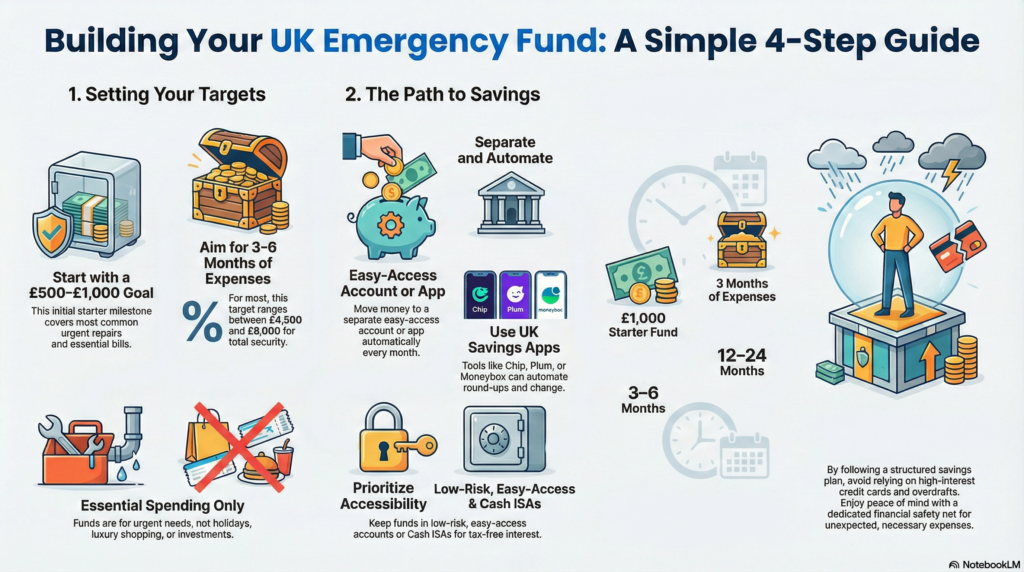
Unexpected expenses happen to everyone — car repairs, medical bills, or sudden loss of income. An emergency fund helps you deal with these situations without stress or debt.
In this guide, we explain what an emergency fund is, how much you need, and how to build one step by step in the UK, even if you’re starting from zero.
What Is an Emergency Fund?
An emergency fund is money set aside specifically for unexpected but necessary expenses.
It is not for:
- Holidays
- Shopping
- Investments
- Luxury spending
It is for:
- Urgent repairs
- Essential bills
- Short-term income gaps
Think of it as your financial safety net.
Why Is an Emergency Fund So Important?
Without an emergency fund, people often rely on:
- Credit cards
- Overdrafts
- Personal loans
These options usually come with high interest, which can quickly turn a small problem into long-term debt.
An emergency fund gives you:
- Peace of mind
- Financial stability
- Better decision-making
How Much Emergency Savings Do You Need?
A common guideline is:
👉 3 to 6 months of essential expenses
For example:
- Monthly essentials: £1,500
- Emergency fund target: £4,500–£9,000
If that feels overwhelming, don’t worry.
Start small.
How to Build an Emergency Fund (Step by Step)
Step 1: Set a Starter Goal
Your first goal should be:
£500–£1,000
This already covers many common emergencies.
Step 2: Open a Separate Savings Account
Keep emergency money separate from your current account.
Good options include:
- Easy-access savings accounts
- App-based savings accounts
- Cash ISAs (for larger balances)
If you’re new to saving, apps can make this easier.
👉 You may find our guide to the best savings apps in the UK helpful. [Link]
Step 3: Automate Your Savings
Automation is key.
Set up:
- A weekly or monthly transfer
- Even £25–£50 at a time
You won’t miss money you never see.
Step 4: Increase Gradually
Once your starter goal is reached:
- Increase contributions when income rises
- Use bonuses or tax refunds
- Revisit your target yearly
Consistency matters more than speed.
Where Should You Keep an Emergency Fund?
Your emergency fund should be:
- Easy to access
- Low risk
- Protected
Many people choose:
- Easy-access savings accounts
- Cash ISAs (for tax-free interest)
If you’re unsure how Cash ISAs work, see our beginner guide:
👉 How Does a Cash ISA Work? [Link]
Emergency Fund Mistakes to Avoid
- Investing emergency money in stocks
- Locking it into fixed accounts
- Spending it on non-emergencies
- Waiting “until you earn more” to start
Starting small is better than not starting at all.
Can Savings Apps Help?
Yes — especially for beginners.
Savings apps can:
- Automate saving
- Round up spare change
- Separate money into goals
Popular UK options include Chip, Plum, and Moneybox.
(This article may contain affiliate links. Please read our Affiliate Disclosure.)
How Long Does It Take to Build an Emergency Fund?
This depends on:
- Your income
- Your expenses
- Your consistency
Typical timelines:
- £1,000 → 3–6 months
- 3 months’ expenses → 12–24 months
The key is progress, not perfection.
Final Thoughts
An emergency fund is one of the most important steps in personal finance.
You don’t need to be perfect.
You don’t need a high income.
You just need to start.
Why Trust Bright Savings UK?
Bright Savings UK is run by a former banker with over 25 years of experience in the banking and financial services industry. Our goal is to help everyday people save smarter, with clear explanations and practical guidance.
How We Monetize This Site
To support the research and running of Bright Savings UK, we use two primary methods of monetization:
- Affiliate Links: Some links on this site are affiliate links. If you click and open an account, we may receive a commission. This does not change the price or terms you receive from the provider.
- Display Advertising: We host third-party advertisements through Google AdSense. We do not directly control the specific products shown in these ad units, and their presence does not constitute an endorsement by Bright Savings UK.
Disclaimer: This article is for educational purposes only and does not constitute financial advice. Always review provider terms directly before applying.
Pingback: Money Mistakes Young People Make (And How to Avoid Them Early) | Bright Savings UK