
The 50/30/20 Budget Rule Explained for UK Beginners (2026 Guide)
Transparency Disclosure: To keep our guides free for everyone, this post contains affiliate links and display advertisements. If you click an affiliate link and sign up, we may earn a commission at no extra cost to you. As an ex-banker with 25 years of experience, I only recommend tools that I believe provide genuine value to your financial health. Read our full Affiliate Disclosure here.
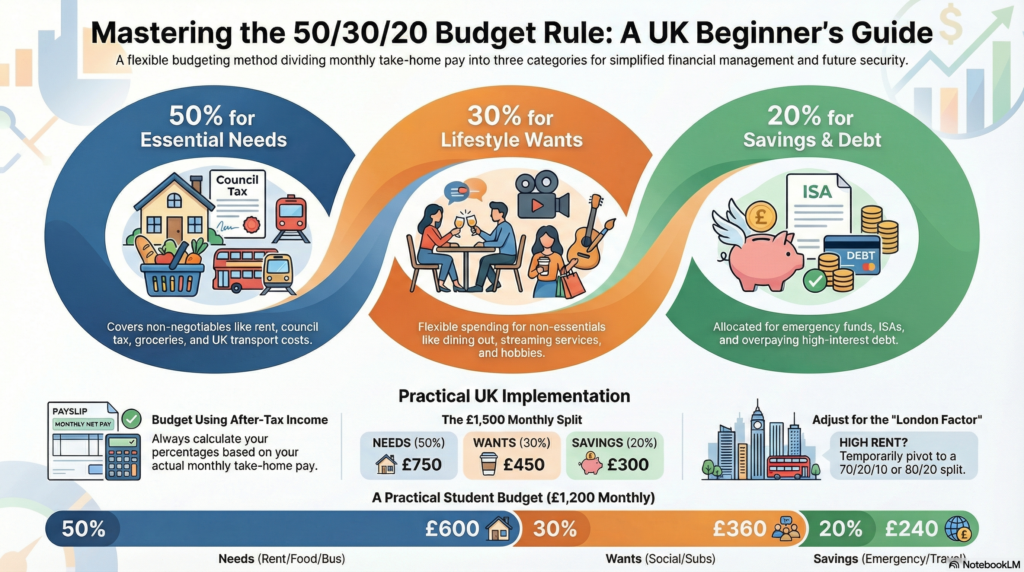
Managing money in the UK can feel overwhelming — especially if you’re:
- A student
- A young adult starting your first job
- A newcomer adjusting to UK living costs
One of the simplest budgeting methods is the 50/30/20 rule.
It’s easy, flexible, and perfect for beginners.
Let’s break it down clearly.
What Is the 50/30/20 Rule?
The 50/30/20 rule divides your after-tax income into three categories:
- 50% Needs
- 30% Wants
- 20% Savings
That’s it.
No complicated spreadsheets required.
Step 1: 50% — Needs (Essential Expenses)
These are expenses you must pay to live and work in the UK.
Examples:
- Rent
- Council tax
- Utilities
- Groceries
- Transport (Oyster, rail, bus pass)
- Minimum debt payments
- Basic phone bill
Example:
If your monthly take-home pay is £1,500:
50% = £750 for essentials
If your needs exceed 50%, you may need to:
- Reduce housing costs
- Share accommodation
- Review subscriptions
- Improve income
Step 2: 30% — Wants (Lifestyle Spending)
These are non-essential but enjoyable expenses.
Examples:
- Eating out
- Coffee runs
- Netflix & streaming
- Gym membership
- Shopping
- Travel
- Entertainment
Using the £1,500 example:
30% = £450 for wants
This category prevents you from feeling deprived — which makes budgeting sustainable.
Step 3: 20% — Savings & Investing
This is the most powerful part.
Savings include:
- Emergency fund
- Cash ISA
- Lifetime ISA
- General savings account
- Investments (if suitable)
- Overpaying high-interest debt
From £1,500 income:
20% = £300 saved monthly
That’s £3,600 per year.
Why This Rule Works Well in the UK
The 50/30/20 method works because:
✔ It’s simple
✔ It creates balance
✔ It builds savings automatically
✔ It prevents overspending
✔ It reduces financial stress
It’s especially helpful for students and newcomers who need structure.
What If You Can’t Save 20%?
Don’t panic.
If you’re:
- A student
- Working part-time
- Recently moved to the UK
Start smaller:
- 70/20/10
- 60/30/10
- Or even 80/20
The key is consistency, not perfection.
Even saving £100 per month builds strong habits.
Example Budget for a UK Student
Monthly take-home income: £1,200
Needs (50%) – £600
- Rent (shared): £450
- Groceries: £100
- Transport: £50
Wants (30%) – £360
- Eating out: £120
- Social activities: £100
- Subscriptions: £40
- Shopping: £100
Savings (20%) – £240
- Emergency fund: £150
- Travel savings: £90
This is realistic and achievable.
Where Should You Put the 20%?
For beginners:
✔ Easy-access savings account for emergency fund
✔ Cash ISA for tax-free savings
✔ Separate savings account (not your current account)
Avoid keeping savings in your spending account — you’ll be tempted to use it.
Common Mistakes to Avoid
❌ Forgetting irregular costs (birthdays, holidays, visa fees)
❌ Budgeting before calculating real take-home pay
❌ Being too strict and giving up
❌ Ignoring savings entirely
Remember — budgeting is a tool, not a punishment.
Is the 50/30/20 Rule Right for You?
It works best if you:
- Want a simple structure
- Don’t enjoy tracking every pound
- Are new to budgeting
- Want to build savings steadily
It may need adjustment if:
- Your rent is very high (London factor)
- Your income fluctuates
- You have significant debt
Final Thoughts
The 50/30/20 rule isn’t about restriction.
It’s about balance.
If you’re 18–24, a student, or new to the UK, this rule gives you:
✔ Control
✔ Direction
✔ Financial stability
✔ A savings habit
Even small monthly savings can grow significantly over time.
Start simple. Adjust as you go.
Your future self will thank you.
Why Trust Bright Savings UK?
Bright Savings UK is run by a former banker with over 25 years of experience in the banking and financial services industry. Our goal is to help everyday people save smarter, with clear explanations and practical guidance.
Suggested Internal Links
- Why Starting to Save at 18 Beats Saving More at 30 [Link]
- How to Budget Your Money for the First Time (Simple UK Guide 2026) [Link]
- How to Build an Emergency Fund in the UK: A Simple Beginner’s Guide (2026) [Link]
How We Monetize This Site
To support the research and running of Bright Savings UK, we use two primary methods of monetization:
Display Advertising: We host third-party advertisements through Google AdSense. We do not directly control the specific products shown in these ad units, and their presence does not constitute an endorsement by Bright Savings UK.
Affiliate Links: Some links on this site are affiliate links. If you click and open an account, we may receive a commission. This does not change the price or terms you receive from the provider.
Disclaimer: This article is for educational purposes only and does not constitute financial advice. Always review provider terms directly before applying.