
The True Cost of Living in the UK for University Students – 2026 Guide
Transparency Disclosure: To keep our guides free for everyone, this post contains affiliate links and display advertisements. If you click an affiliate link and sign up, we may earn a commission at no extra cost to you. As an ex-banker with 25 years of experience, I only recommend tools that I believe provide genuine value to your financial health. Read our full Affiliate Disclosure here.
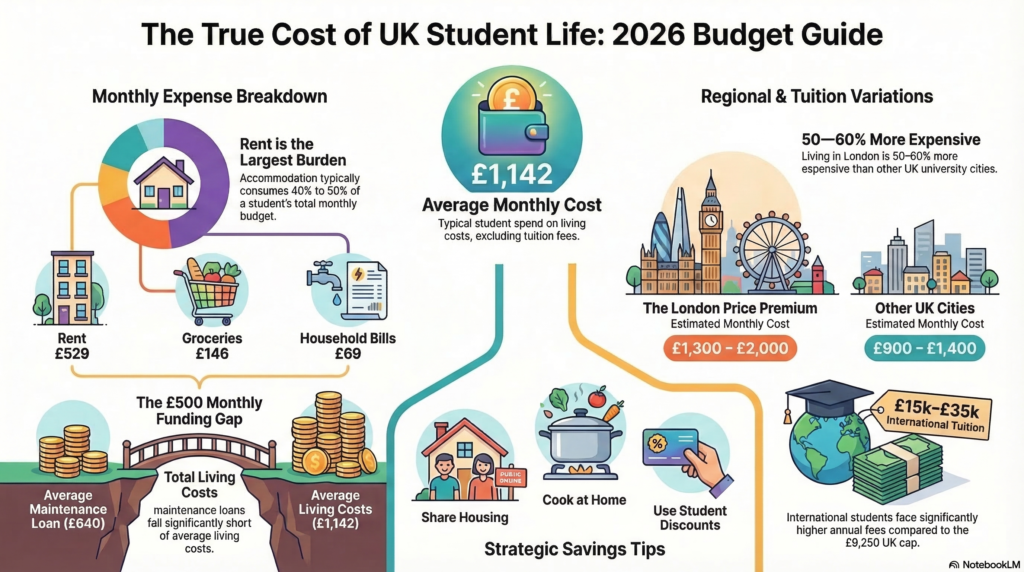
Studying in the UK can be a life-changing experience, but it is also a significant financial commitment. Beyond tuition fees, students must budget for accommodation, food, transport, and daily living expenses.
In this guide, we break down the real cost of living for university students in the UK in 2026, including the differences between local UK students and international students.
Average Student Living Costs in the UK (2026)
According to recent student surveys, the average student spends about £1,142 per month on living costs in the UK, excluding tuition fees.
However, the actual cost depends heavily on:
- the city you live in
- accommodation type
- lifestyle and spending habits
Typical monthly student living costs in 2026:
| Expense | Average Monthly Cost |
| Rent | £529 |
| Groceries | £146 |
| Household bills | £69 |
| Transport | £67 |
| Eating out / social life | £61 |
| Phone & subscriptions | £28 |
| Other expenses | £242 |
| Total | ≈ £1,142 |
Rent remains the largest expense for most students, followed by food and daily living costs.
Cost of Living: London vs Other UK Cities
The city you choose has a major impact on your budget.
Estimated monthly student costs in 2026:
| Location | Monthly Cost |
| London | £1,300 – £2,000 |
| Other UK cities | £900 – £1,400 |
London can be 50–60% more expensive than other cities because of higher rent and transport costs.
Accommodation Costs
Accommodation typically takes 40–50% of a student’s total budget.
Typical student housing costs:
| Type of Accommodation | Monthly Cost |
| University halls | £500 – £800 |
| Private student accommodation | £600 – £1,200 |
| Shared house/flat | £400 – £700 |
| Studio apartment | £850+ |
Students living in expensive university cities such as Oxford may spend £825–£990 per month on accommodation alone.
Food and Grocery Costs
Students usually spend £150–£250 per month on groceries depending on their lifestyle.
Typical grocery prices in the UK:
- Bread: about £1.20
- Milk (1 litre): about £1.00
- Eggs (12): around £2.20
- Meal at cheap restaurant: £12–£15
Cooking at home is one of the best ways to reduce food expenses.
Transport Costs
Transport costs vary depending on the city.
Typical student transport expenses:
| Transport Type | Cost |
| Bus / metro pass | £50 – £100 per month |
| London transport | £100 – £150 per month |
| Train travel | 30% discount with student railcard |
Students in London often apply for the 18+ Student Oyster Card to reduce travel costs.
Additional Hidden Costs Students Often Forget
Many students underestimate the extra expenses that come with university life.
Common hidden costs include:
- course books and study materials
- laptop and software
- winter clothing
- student society memberships
- visa and immigration costs (international students)
- travel home during holidays
Planning for these expenses can prevent financial stress later.
Cost Difference: Local vs International Students
The biggest difference between UK students and international students is tuition fees.
Typical annual tuition fees in 2026:
| Student Type | Tuition Fee |
| UK students | up to £9,250 per year |
| International students | £15,000 – £35,000 per year |
International students also need to show proof of financial support when applying for a visa.
UK visa rules generally require students to show they can support themselves with around:
- £1,483 per month in London
- £1,136 per month outside London
Is the Student Maintenance Loan Enough?
Many UK students rely on a maintenance loan to cover living costs.
However, the average loan provides only around £640 per month, while living costs average about £1,142 per month, leaving a shortfall of roughly £500 per month.
Because of this gap, many students rely on:
- part-time jobs
- parental support
- personal savings
Typical Total Annual Student Budget
A realistic annual student budget in 2026 may look like this:
| Category | Annual Cost |
| Living costs | £11,000 – £16,000 |
| Tuition (UK students) | £9,250 |
| Tuition (international students) | £15,000 – £35,000 |
Estimated total:
- UK students: £20,000 – £25,000 per year
- International students: £30,000 – £50,000 per year
Tips to Reduce Living Costs as a Student
Students can significantly reduce expenses with smart habits:
1. Share accommodation
Rent is cheaper when sharing with other students.
2. Cook at home
Avoid frequent takeaways.
3. Use student discounts
Many retailers offer student discounts.
4. Budget monthly spending
Track spending to avoid overspending.
5. Use cashback and savings apps
Some apps reward students for everyday spending.
Final Thoughts
The UK remains one of the world’s most popular destinations for higher education, but it is important to understand the true cost of living before starting university.
In 2026, most students should expect to spend around £900–£2,000 per month on living expenses, depending on location and lifestyle.
Planning ahead, building good financial habits, and using student discounts can make university life much more affordable and less stressful.
Why Trust Bright Savings UK?
Bright Savings UK is run by a former banker with over 25 years of experience in the banking and financial services industry. Our goal is to help everyday people save smarter, with clear explanations and practical guidance.
Suggested Internal Links
- Best Ways to Save Money on Groceries in the UK (2026 Guide) [Link]
- Is TopCashback Worth It in 2026? A Beginner’s Guide for UK Savers [Link]
- How to Earn £100–£300 Opening a UK Bank Account (2026 Cashback Guide) [Link]
How We Monetize This Site
To support the research and running of Bright Savings UK, we use two primary methods of monetization:
Display Advertising: We host third-party advertisements through Google AdSense. We do not directly control the specific products shown in these ad units, and their presence does not constitute an endorsement by Bright Savings UK.
Affiliate Links: Some links on this site are affiliate links. If you click and open an account, we may receive a commission. This does not change the price or terms you receive from the provider.
Disclaimer: This article is for educational purposes only and does not constitute financial advice. Always review provider terms directly before applying.