
What Is a Bank Account? A Simple Beginner’s Guide (UK 2026)
Transparency Disclosure: To keep our guides free for everyone, this post contains affiliate links and display advertisements. If you click an affiliate link and sign up, we may earn a commission at no extra cost to you. As an ex-banker with 25 years of experience, I only recommend tools that I believe provide genuine value to your financial health. Read our full Affiliate Disclosure here.
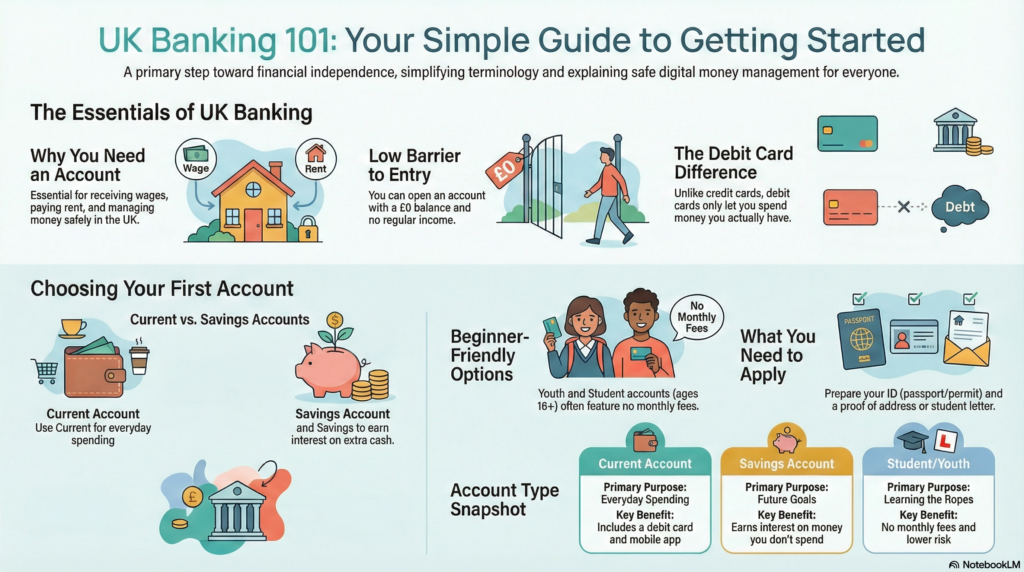
If you’ve never had a bank account before — or you’re new to the UK — it’s completely normal to feel confused.
Words like current account, debit card, or online banking are often explained as if everyone already understands them. This guide is different. We’ll keep things simple and clear.
What Is a Bank Account (In Plain English)?
A bank account is a safe place to keep your money and use it for everyday things like:
- Getting paid
- Paying bills
- Buying things online or in shops
- Saving money for later
Instead of carrying cash, your money is stored digitally by a bank, and you access it using a debit card, an app, or online banking.
Do You Need a Bank Account?
You don’t have to have one — but in the UK, life is much harder without it.
Most people need a bank account to:
- Receive wages or student payments
- Pay rent or mobile phone bills
- Buy things online
- Manage money safely
That’s why opening a bank account is usually one of the first steps to financial independence.
What Types of Bank Accounts Are There in the UK?
Here are the main ones beginners should know about:
1. Current Account
This is the most common type.
You use it for:
- Everyday spending
- Getting paid
- Paying bills
It usually comes with:
- A debit card
- Online and mobile banking
- Direct debits and standing orders
👉 Most people start with a current account.
2. Savings Account
This is for money you don’t need to spend every day.
It helps you:
- Put money aside
- Earn a small amount of interest
- Build good saving habits
Savings accounts are often used for:
- Emergency funds
- Short-term goals
3. Student or Youth Accounts
Some banks offer special accounts for:
- People aged 16–17
- University or college students
These may include:
- No monthly fees
- Simple features
- Lower overdraft risk
They’re designed to be more beginner-friendly.
What Is a Debit Card?
A debit card lets you spend money directly from your bank account.
When you pay:
- The money comes out immediately
- You can only spend what you have (unless overdraft is enabled)
This is different from a credit card, which involves borrowing money.
Can You Open a Bank Account at 16 or 17?
Yes — in many cases.
- Some banks allow accounts from age 16
- Others may require a parent or guardian
- You usually need:
- ID (passport or residence permit)
- Proof of address (or student letter)
If you’re new to the UK, requirements may vary slightly, but options do exist.
Do You Need to Be Rich to Have a Bank Account?
Absolutely not.
You can open a bank account with:
- £0 balance
- No regular income
- Part-time or irregular work
Banks expect beginners to start small.
Common Beginner Mistakes to Avoid
Here are a few important ones:
- ❌ Spending money without checking your balance
- ❌ Using overdraft without understanding the fees
- ❌ Ignoring bank messages or emails
- ❌ Thinking “I’ll deal with it later”
A bank account is a tool — learning how it works early saves stress later.
If You’re New to the UK
If you’ve recently moved to the UK:
- The banking system may be different from your home country
- Some terms may feel unfamiliar
- That’s normal
This site explains everything assuming no prior knowledge of the UK system.
So, Should You Open a Bank Account?
For most people, the answer is yes — but only when you understand what you’re opening and why.
You don’t need to rush. The important thing is to:
- Learn the basics
- Choose beginner-friendly options
- Avoid unnecessary fees
Final Thought
Everyone starts somewhere.
Having questions about money doesn’t mean you’re behind — it means you’re learning. One clear step at a time is more than enough.
Why Trust Bright Savings UK?
Bright Savings UK is run by a former banker with over 25 years of experience in the banking and financial services industry. Our goal is to help everyday people save smarter, with clear explanations and practical guidance.
What to Read Next
👉 How to Build an Emergency Fund in the UK (Beginner Guide)
👉 Simple Budgeting Tips for Beginners
👉 Money Mistakes to Avoid When You’re Starting Out
How We Monetize This Site
To support the research and running of Bright Savings UK, we use two primary methods of monetization:
- Affiliate Links: Some links on this site are affiliate links. If you click and open an account, we may receive a commission. This does not change the price or terms you receive from the provider.
- Display Advertising: We host third-party advertisements through Google AdSense. We do not directly control the specific products shown in these ad units, and their presence does not constitute an endorsement by Bright Savings UK.
Disclaimer: This article is for educational purposes only and does not constitute financial advice. Always review provider terms directly before applying.
Pingback: How to Budget Your Money for the First Time (Simple UK Guide) | Bright Savings UK
Pingback: Money Mistakes Young People Make (And How to Avoid Them Early) | Bright Savings UK