
What Is Interest? Simple Interest, Compound Interest & Why It Matters
Transparency Disclosure: To keep our guides free for everyone, this post contains affiliate links and display advertisements. If you click an affiliate link and sign up, we may earn a commission at no extra cost to you. As an ex-banker with 25 years of experience, I only recommend tools that I believe provide genuine value to your financial health. Read our full Affiliate Disclosure here.
Managing money can feel confusing at first, especially when people start talking about interest. But interest is actually one of the most important ideas to understand if you want to save smarter and avoid unnecessary debt.
In this guide, we’ll explain simple interest, compound interest, and the power of interest in plain English — no Maths background needed.
What Is Interest?
Interest is the extra money:
- You earn when you save or invest
- Or pay when you borrow money
In simple terms:
- 💰 Saving money → interest works for you
- 💸 Borrowing money → interest works against you
Understanding how interest works helps you:
- Grow savings faster
- Avoid expensive debt
- Make better financial decisions early in life
What Is Simple Interest?
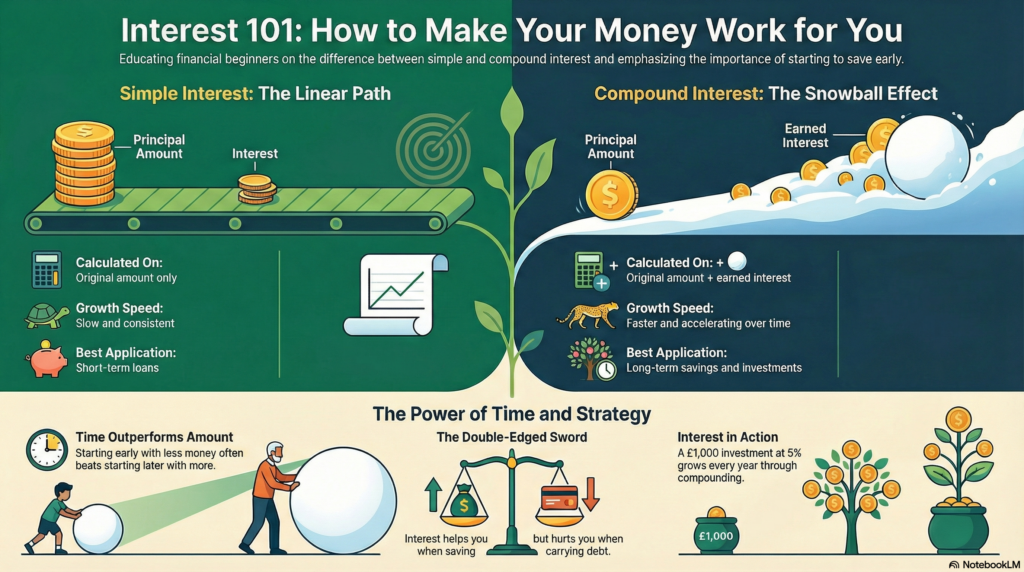
Simple interest is calculated only on the original amount (called the principal).
Example:
You save £1,000 at 5% simple interest for one year.
- Interest earned = £1,000 × 5% = £50
- Total after one year = £1,050
If you leave it for another year:
- You earn another £50
- Total after two years = £1,100
📌 The interest does not increase each year.
Where Simple Interest Is Common:
- Some savings accounts
- Short-term loans
- Basic financial examples
What Is Compound Interest?
Compound interest means you earn interest on:
- Your original money plus
- The interest you already earned
This is often described as “interest on interest”.
Example:
You save £1,000 at 5% compound interest.
- Year 1: £1,050
- Year 2: £1,102.50
- Year 3: £1,157.63
Each year, your interest grows because the balance is bigger.
📌 This is why compound interest is so powerful over time.
Simple vs Compound Interest (Quick Comparison)
| Feature | Simple Interest | Compound Interest |
| Calculated on | Original amount only | Original + interest |
| Growth speed | Slow | Faster over time |
| Best for | Short term | Long-term saving |
| Used in | Basic loans | Savings & investments |
The Power of Interest (Why Time Matters More Than Amount)
One of the biggest myths is:
“I don’t earn enough to start saving.”
In reality, time matters more than how much you save.
Example:
- Person A saves £50/month from age 18
- Person B saves £100/month from age 30
Person A often ends up with more money because compound interest had more time to work.
📌 Starting early — even with small amounts — gives you a huge advantage.
Interest Can Help or Hurt You
Interest Helps When:
- You save regularly
- You use high-interest savings accounts
- You keep money invested long term
Interest Hurts When:
- You carry credit card balances
- You only pay minimum repayments
- You don’t understand borrowing costs
Knowing the difference helps you stay in control.
How Beginners Can Use Interest Wisely
If you’re just starting out:
- Focus on saving first
- Learn how interest works before borrowing
- Use free tools to compare rates and understand costs
Many beginners explore:
- Cashback platforms to save small amounts
- Comparison sites to understand interest rates
- Free educational tools before committing to anything
You don’t need to rush — learning comes first.
Key Takeaways
- Simple interest grows slowly
- Compound interest grows faster over time
- Starting early is more powerful than saving more later
- Interest can work for you — or against you
Understanding interest is one of the smartest financial steps you can take.
Why Trust Bright Savings UK?
Bright Savings UK is run by a former banker with over 25 years of experience in the banking and financial services industry. Our goal is to help everyday people save smarter, with clear explanations and practical guidance.
How We Monetize This Site
To support the research and running of Bright Savings UK, we use two primary methods of monetization:
- Affiliate Links: Some links on this site are affiliate links. If you click and open an account, we may receive a commission. This does not change the price or terms you receive from the provider.
- Display Advertising: We host third-party advertisements through Google AdSense. We do not directly control the specific products shown in these ad units, and their presence does not constitute an endorsement by Bright Savings UK.
Disclaimer: This article is for educational purposes only and does not constitute financial advice. Always review provider terms directly before applying.
Pingback: What Is the Average Savings Amount in the UK by Age? (2026) | Bright Savings UK